I recently reviewed Jacob Shatzer’s, Transhumanism and the Image of God, for Pneuma journal. It’s an important read for Christian leaders for a number of reasons. I can’t post that fuller review here, but will highlight some take-aways to perhaps pique reader interest.
Technology and Transhumanism
First, Transhumanism is a philosophical movement and ideology. It is a worldview, argues Shatzer, that holds a highly optimistic view of human progress. But the ongoing progression involves the freedom to integrate tools of technology, especially digital forms, into the process of human enhancement and development.
Second, for Transhumanists technology is viewed as an indispensable tool for human advancement, and humans have a right to unrestricted use of technology. This includes the right to modify one’s body or even brain using technology. Tech-integration allows not only for new ways to experience reality (through virtual and augmented reality), but holds potential to redefine and create new realities. Transhumanists celebrate the idea that we might one day be free to either clone or upload our minds onto non-biological substrates. In other words, maybe being biological is not necessary to being human after all, and perhaps a decent hard drive or advanced robotic body will suit us better.
Third, all use of technology shapes the user in some way. This is one of Shatzer’s key points in the book. Every technology has a purpose, a goal, whether hammer or smartphone. Further, no technology is neutral. Using any technology means giving up something else (i.e., the ability to be free of the goals of given technology). If I use a hammer often, I tend to, as the saying goes, begin to see everything as a nail. Likewise, with smartphone in hand, everything becomes potential for a possible social media post, and I need to evaluate whether to do so or not. The tool in hand changes my focus to follow its functional purpose.
Fourth, uncritical use of technology tacitly leads humans to adopt the values and expectations of Transhumanism. Regular and uncritical use of technology will, over time, inevitably conform the user towards serving the purposes of the tool. And, whether I have heard the term or philosophy of “Transhumanism” or not, repetitive use of technology will shape my desires and beliefs toward being more open to transhumanist ideology.
Shatzer has a lot more to say about Transhumanism and the impact of digital technologies, but the above points stand out as highlights for me. In light of the above, we should make the effort to reflect more critically concerning our use of technology (and how it uses us). For Christians, it should lead us to evaluate how our personal and church lives are being shaped by our engagement with various technologies. A current example might help.
Virtual Bed Church
Right now we are learning how to live within the constraints of the COVID-19 pandemic health protocols, including physical distancing and (until very recently) the inability to gather together for corporate worship. Churches have done a lot of work to make virtual gatherings possible through use of video technologies. While this situation has led some to long all the more for reuniting in person, the experience of being able to meet virtually has also impacted expectations and possibilities.
Many are now used to virtual social interaction. And whereas four months ago, we might not have considered such to be a practically acceptable way to gather for worship, now we at least know we can do it, and perhaps even weigh the advantages and disadvantages of each delivery method more pragmatically (does this “work” for immediate ends?) than theologically (is this working for long-term ends revealed in Scripture?).
After all, virtual worship doesn’t even demand I get out of bed! (Or so I’ve heard 😁.) While that helps, say, with overcoming the immediate discomfort barrier of having to get myself to a gathering where I might need to interact with not only friends but strangers, is bed worship the best venue for helping me become more a part of the corporate temple of the Spirit being built by Jesus (1 Cor 3:16)? (Rhetorical question. Answer most likely “NO.”)
Embodied Worship
This image simply emphasises embodiedness and is not intended to suggest a form of worship that might vaguely remind the Christian fundamentalist of yoga. Please do not email me about this. Sigh.
Christian worship should always aim to be embodied worship as much as possible, for at least a couple of reasons. First, humans are created as flesh, and of the dust (meaning mortal in biology). This was God’s choice; he didn’t need to make us out of meat, but he did. Second, Jesus comes as the Son of God incarnate. Literally also enfleshed and made out of meat. Further, he currently reigns as risen Lord in the flesh. God has chosen to bond himself to the human race with our biological substrate.
The purposeful biological nature of humans should encourage us to be mindful as we engage with digital technologies in corporate worship. This is not to negate the usefulness of virtual technology for worship in special circumstances, such as connecting with those unable to participate in person with the congregation due to physical disabilities. But it does mean that the move towards virtual connection should remain an exception rather than merely an equally acceptable alternative.
Mindful Technology
I commend Shatzer’s book to Christian leaders. It will help us become more fluent in the cultural “language” of technology, along with the need to be more mindful of how we’re already being shaped by the technological tools we use. In turn, this should assist us in discerning when and how to implement technologies into our Christian worship and discipleship.
Ever felt disoriented in your faith? Ever felt the need to broadcast your raw doubts and emotions to the world via social media?
Marty Sampson
In early August, Hillsong worship leader and songwriter, Marty Sampson, posted a now widely-read Instagram post (now removed) announcing the apparent loss of his Christian faith. He identifies at least half a dozen reasons for his doubts, with a recurring theme seeming to be that the church (at least the church in which he finds himself) has not allowed space to ask the tough questions.
John Cooper
Since Sampson’s very public confession, John Cooper, lead singer for the Christian band, Skillet, published a Facebook post where he expressed his disappointment in Sampson and other Christian leaders venting publicly on social media, in particular about their abandonment (or almost abandonment) of the Christian faith. Sampson has since fired back with a rejoinder to Cooper.
Now, Gen Xers like myself might be tempted to simply roll our eyes at this public joust between celebrity Christians debating how influencers should use their influence. But if we resist this temptation, not only will we avoid possible eye strain, we’ll be able to focus and reflect on some important and very relevant issues here.
When it comes to the matter of spiritual disorientation. Many, if not most, Christians at some point experience some measure of doubt or confusion about their faith. So, while we might have some opinions about the appropriate use of social media for venting raw emotions (especially for Christian celebrities), it’s not the case that Christians should ignore our emotions or questions that might unsettle us.
Scripture Talk on Ps 73
The above is simply a preamble to give context to a teaching session in which I addressed the issue of spiritual disorientation, looking at Psalm 73. This Psalm was composed by Asaph, Israel’s worship leader when Solomon was king. It reveals Asaph’s own struggle with doubts about God’s goodness. He wonders whether remaining faithful to God is really worth it, or even realistic, considering the prevalence of injustice in the world. Asaph reminds us that sometimes we’ll feel that reality doesn’t match what we’d expect if a good God was really in charge.
This talk was given at King St. Community Church’s Young Adult group, where I’m currently serving as interim leader. I’d already planned to speak on Ps 73 prior to Marty Sampson’s Instagram post, but having a widely-known worship leader publicize (perhaps prematurely) his own Asaph moment, really helped highlight the relevance of this raw but encouraging Psalm. The focus is the way habitual corporate, God-centred worship can help serve as a point of reference in reorienting believers in their faith.
So, please give this a listen. I’d appreciate your feedback, and some reflection questions are below.
KSYA – Disoriented: Help When Faith Doesn’t Make Sense 2019-08-18
Questions for Reflection
What questions or observations might cause you to become disoriented in your Christian faith?
What’s your reaction to some Christian leaders announcing their faith struggles (feelings, response, etc.)?
To what extent is corporate worship (gathering with other Christians to focus on God) important for your spiritual life? Why?
What do you think of the idea that worship needs to be God-centred?
This post might generate some discussion. I hope so. The topic needs to be discussed, since so much of what we talk about in the church tends to be assumptive about what the church is created to be, and I think asking the question of the church’s purpose is an important one.
What has led me to raise this subject is reading CT editor, Mark Galli’s recent article, “The Church’s Sickness Unto Death.” In it he argues that the problem evangelicalism has had in recent decades in trying to move the church towards being more missional (with limited success) is that, “The church, from the start, has not actually been designed to be missional.” In fact, “when the church is conceived primarily as being missional, existing for the sake of the world,” Galli states, it leads to it becoming ineffective both in discipleship and worship, on the one hand, and in evangelism and social justice issues on the other.
The church, from the start, has not actually been designed to be missional.
Mark Galli
In short, the church was never really designed to do both, and Galli opts for the church as primarily being designed to help form believers into disciples, rather than an institution for social change. To be clear, it is not as if Galli is against social justice involvement or evangelistic endeavours. But he believes that parachurch organizations are better suited to be effective in those types of mission (and that Christians should involve themselves in such organizations as a matter of faithful discipleship). So, Galli’s model might look something like the image below that I pilfered from the internet.
This challenge to the missional focus so oft repeated in church circles these days will strike some as simply wrong-headed. What could be more intuitively obvious than the church existing to transform the world? For Pentecostals (my tribe), who emphasize the church’s call to be witnesses for Jesus (Acts 1:8), Galli’s words might be viewed as a sign of losing spiritual zeal for evangelism.
What is the church’s mission?
But before rushing to rash judgments, let’s take a step back and ask some important questions. And to be honest, in the discussion that follows, I’m not quite sure where I’ve quite landed on this issue. But I do know this: the matter of the design and purpose of the church is not a simple matter, and it is fairly easy to import North American pragmatism into our interpretation of Scripture, leading us to assume certain views of how mission should be accomplished are just obviously true. They are not; and we are required to give this more thought.
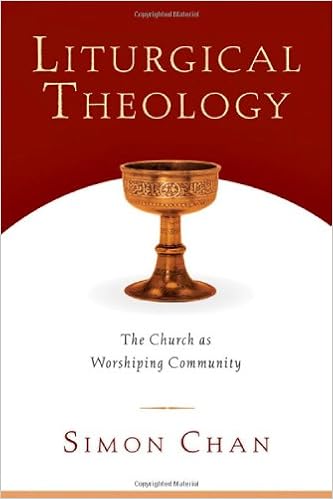
What I want to do, briefly, is show that Galli’s questions are not bizarre, or outside of a Pentecostal approach to church mission. So, in what follows, I’ll leave Galli behind and focus on the contributions of Simon Chan, a Classical Pentecostal theologian, who teaches in Singapore. In particular, his 2006 book, Liturgical Theology directly addresses the issues Galli is raising.
First, Chan strongly echoes Galli’s proposal that it is wrong to view the church as existing for the sake of the world. Chan puts it this way. We basically have two options theologically when it comes to understanding the church: either the church has been formed for the sake of the creation, or creation has been formed for the sake of the church. Get this wrong, and you will get everything else wrong about the purpose of the church.
Chan uses N.T. Wright as his foil (which causes me pause, because I really like Wright!). Wright takes the church-exists-for-creation approach, whereas Chan advocates for the creation-exists-for-the-church approach. Whereas Wright accents the Genesis creation story, Chan focuses on Paul’s broad scope summary of the purpose of the church in Ephesians. From Paul’s perspective, he argues, creation is formed in order that there would one day be a people of God (body or Christ, temple of the Spirit, etc.). Creation is important (and certainly not to be abused), but it is primarily the physical framework necessary for the church to be brought into existence. So, creation will continue (eventually as new creation), so that the church can continue eternally as well.
Church for creation?
This creation-for-church model, Chan argues, has always been God’s plan. To reverse the order makes the church into a temporary organization to help get creation back to where it should be. And, if the church isn’t doing this very well, then why not just join some other social justice organization? Pushed to it’s extreme, the church becomes just one of any number of social agencies, and perhaps even superfluous to God’s work in the world.
Now, I’m sure Wright would have a good response to this, since he is far more committed to the institutional church than the average North American evangelical. But I don’t want to go down the road of investigating Wright position. For my purposes, I think Chan has identified something very important, and something probably embedded into the assumptions of North American Pentecostals and broader evangelicalism. And it’s something we might never think to ask: does the church exist for creation, or creation for the church? How we answer this will determine our local church priorities.
Or creation for the church?
To clear up some potential misunderstandings, firstly, Chan is not saying that the world should serve the church. He is not seeking some form of return to Christendom, if I’m reading him correctly. He is only identifying the theological purpose (telos) of the church: creation was formed so that God could have relationship with a created people for himself in and through his Son, Jesus–the church.
Secondly, Chan is not saying that Christians should not do good in the world. Of course they should, and why wouldn’t they? This should be part of Christlikeness being lived out in daily life. So too, Christians should be involved in witness through evangelism. All believers should be prayerful about how to involve themselves in meaningful ways in the brokenness of society in all manner of ways. But the priority of the church corporate is to worship and form disciples, and in doing that, the church bears faithful witness to Jesus. To not do this means being a less-than-faithful witness.
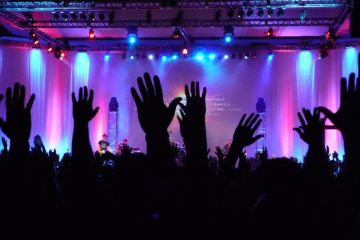
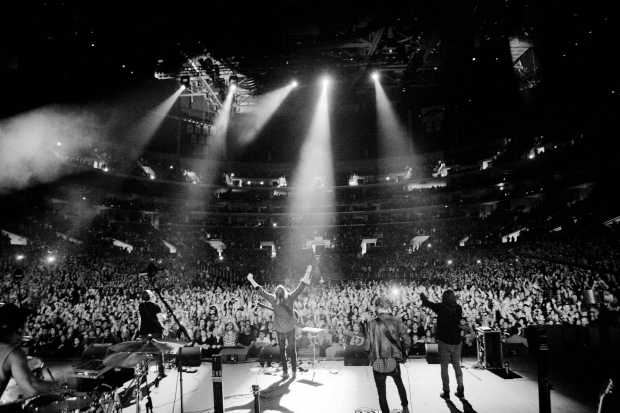
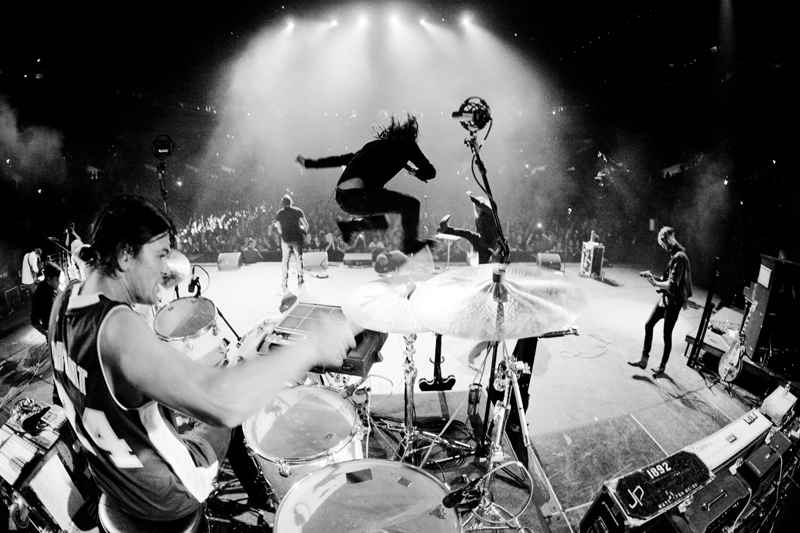
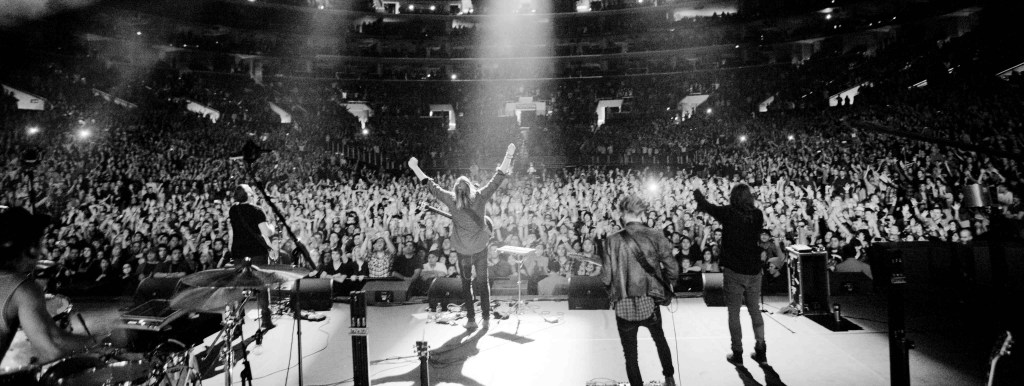
Side note: Chan would likely not endorse the concert worship model represented in this image. 🙂
This last point is worth a bit more explanation. It is often assumed that worship and discipleship is something other than witness, the latter being viewed as the activity of explicit evangelism. But in Chan’s view, the church is being a witness only insofar as it is truly representing the Trinity in the world as clearly as possible. The image of God is formed in God’s people through regular participation in thoughtful, intentional, theologically robust corporate liturgy. Worship and discipleship are inseparable for Chan, and only in being formed as the people of God does the church truly fulfill its call to bear witness in the power of the Spirit. And remember, Chan is a Classical Pentecostal.
What’s your view?
So, in sum, the church is called missionally to bear witness to the triune God by becoming formed as worshiping disciples more and more into the likeness of Jesus. I think this more or less summarizes key points in Chan’s view, and I think this is close to what Galli is getting at in his article. So, Pentecostals cannot simply dismiss Galli as ignoring the Christian vocation of witness; he is not. And in Chan we have at least one Pentecostal voice saying something remarkably similar.
The question is now in our court, and again, I’m not quite sure where I land on this one. How do you see the purpose of the church: church-for-creation or creation-for-church? And what theological support do you have for your position? Let the conversation begin!
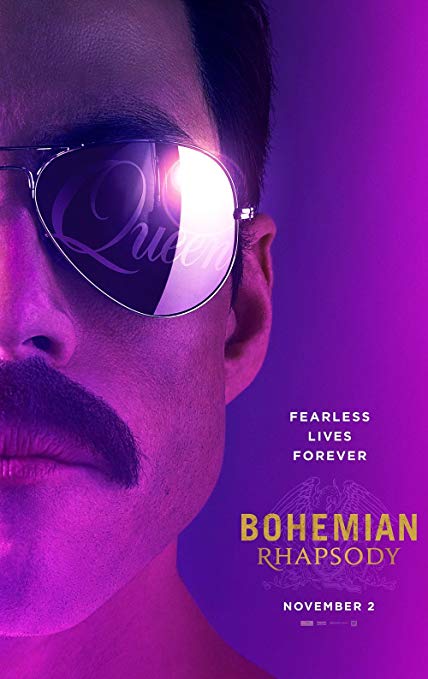
This fall I saw Bohemian Rhapsody. Three times. I never see movies three times at a theatre, let alone a biopic. So why this one?
Well, I was pleasantly surprised when I saw it the first time. I felt like I’d been to a real concert.
The backstory here is that 70s and 80s Pentecostal (and other) fundamentalist subculture passionately discouraged attending such events, and probably for some good reasons. (The farce of backward masking was not one of them.)
But having finally hit the 50-year mark earlier in the fall, my pathological need to bow to fundamentalist peer pressure was finally starting to crack. I found myself not only viewing the film, but captivated by the depiction of the rock band, Queen, and legendary front man, Freddy Mercury. I was intrigued by the creative rawness portrayed in the music-making process (at least what it was in the 70s), and enjoyed feeling something of the rapture of being caught up (no reference to dispensationalism intended) in participation with the multitude of concert-goers.
I wanted my family, especially my 21-year-old son, the guitar-player, to enjoy this experience as well. But I couldn’t get them all together for one unified viewing, and so was “forced” to go twice more (once with my wife and daughter, and once more with my son).
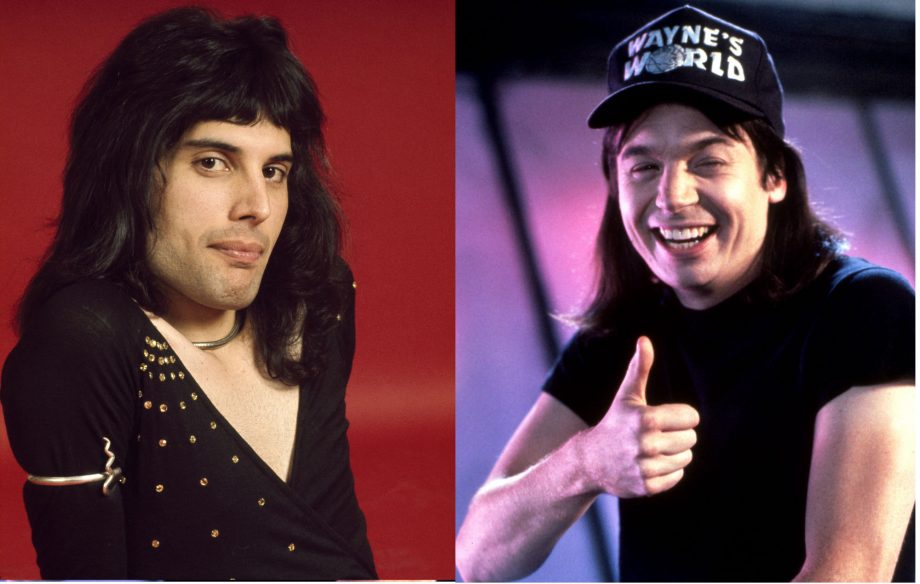
Everyone enjoyed the movie. We now own the soundtrack and another album or two from Queen. And I have a much fuller appreciation of Wayne’s World. Thank you, Mike Myers.
But since I’m a theology teacher, I couldn’t help but have a theological thought or two go through my mind while watching the film. In particular, I began to consider the connection between Queen and worship in the church.
Historical Accuracy: A Caveat
Before proceeding, I need to address a potential criticism of the film in order to avoid having my reflections derailed at the outset. I am aware that Bohemian Rhapsody was not entirely historically accurate on all accounts, especially timeline-wise, in its depiction of Freddy Mercury and the boys. My thoughts are only based on the movie’s rendering of the story. In other words, regardless of how historically precise the movie was or was not is irrelevant for my thoughts here. I’m simply using the film as a literary device for theological reflection. Please humour me.
In case my reference to literary device is unclear, let’s take another movie illustration. Remember in the original Spiderman film trilogy with Tobey Maguire, when uncle Ben told a young Peter Parker that “With much power comes much responsibility”? What can we learn from these wise words that’s applicable to our own lives? Much! And it’s irrelevant that there is no such historical person as Spiderman. We use a scene or dialogue from the movie or book as a tool (device) to spur on other thinking. That’s what I mean by literary device.
Now at this point my preamble has ended up being far too long, but I’m going to forge ahead anyway. I am also going to try very hard to avoid any cheesy applications here using lyrics to Queen’s songs (although in a way, didn’t Jesus come to show all of us that “crazy little thing called love”? Sorry.) Bohemian Rhapsody provoked two reflections for me concerning music and worship in contemporary evangelicalism; one is an affirmation, one is a challenge.
The Affirmation: Celebrate Creativity
Queen apparently worked hard to be creative in their music. More than one scene highlights this, but one stands out for me: the vignette of the band producing their first album.
To distinguish themselves from all the other bands out there, the band knew some new sounds were needed. Unique creativity was required, which would entail commitment and a willingness to take risks. And so, we’re shown the young band members selling their only van to pay for time in a recording studio to produce an album. In studio, bandmembers strive to produce new sounds through experimentation—trying everything from swinging amplifiers suspended by a rope, to tossing coins on a drum. Whether Queen was the first to do this type of thing is irrelevant to me (remember, literary device!). The point is that they are portrayed as working hard, giving resources, time, and energy for the sake of creativity.
This reminded me of the behind-the-scenes effort musicians and worship leaders put in to helping lead congregations, week after week, in creative ways. True, it’s not quite the same context. The goal of the worship leader is not primarily (or even at all?) to stand out from all the other leaders. And yet, God has given musical and artistic gifts to the church, and creativity needs to be given room to be cultivated. Not all expressions of our creativity will make it into a Sunday morning worship context (nor should it; see my second observation below). But artistic ability—whether musical or other fine arts—needs to be respected, honoured, given room, and enjoyed in the church, since it points us to the God who is the author of creativity. Being creative takes dedication and work. It takes time and energy—actual, physical brain energy. And it takes courage to present what you’ve created, whether song, painting, dance, and so forth, to the public.
So, kudos to all of you that put in the time to use the gifts that God has given to helping us better appreciate God’s creativity. Keep it up. Maybe even try some new things. Celebrate and enjoy creativity. Bohemian Rhapsody can remind us afresh of the value of the creativity and artistry God has woven into creation.
The Challenge: Distinguish between Corporate Worship and Concert
I was also reminded of a conviction I’ve held for some time, which is that a distinction needs to be made between a music concert and congregational singing in worship. I realize there is disagreement on this, depending on one’s philosophy of worship. See James MacKnight’s excellent recent blog on this here. And trust me, the title of his blog is cleverly and intentionally misleading—please read it!
My view is that worship serves a purpose, which is related to elevating the human view of God and forming people to reflect God’s image more accurately in and through relationship to Christ. In short, worship needs to be connected to the formation of disciples of Jesus, which in turn glorifies God. For me that is a central criterion for determining whether corporate worship is, well, worship at all. This means I tend to think there needs to be a mostly clear distinction between the concert venue and corporate worship venue (with some blurring of categories being inevitable). More about this in a moment.
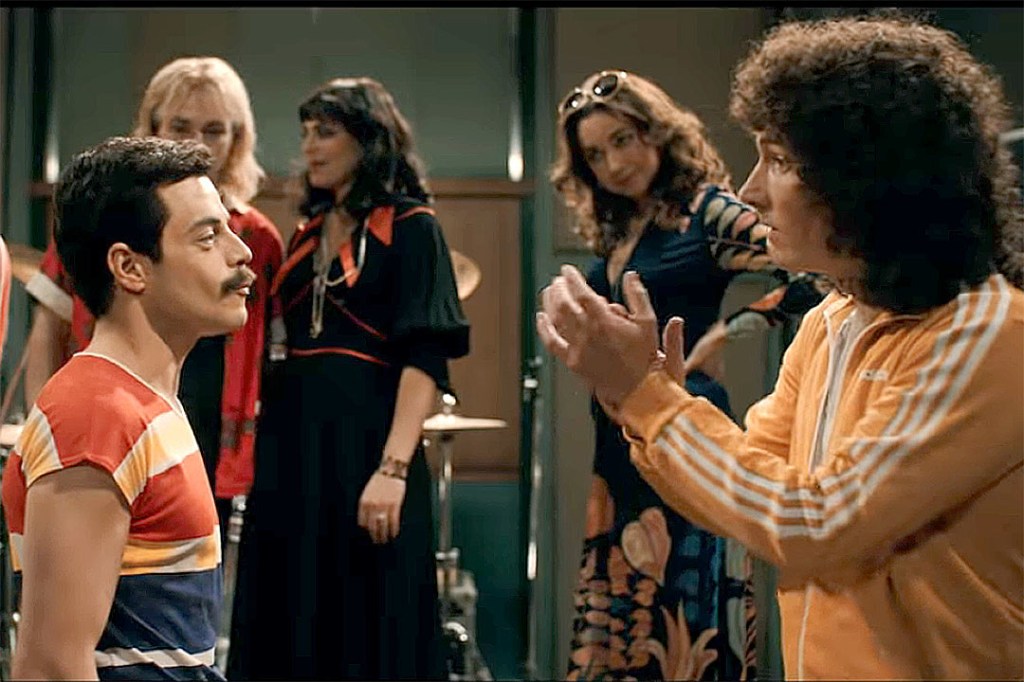
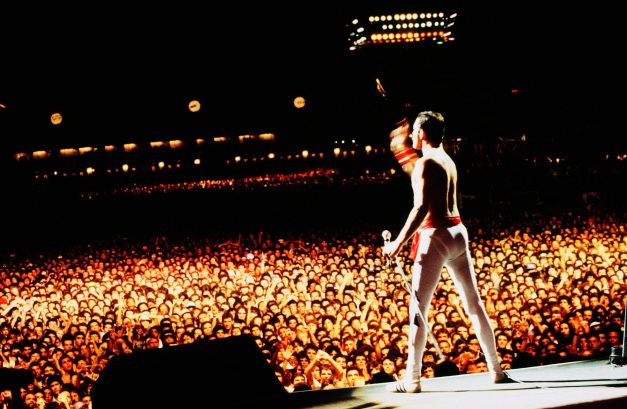
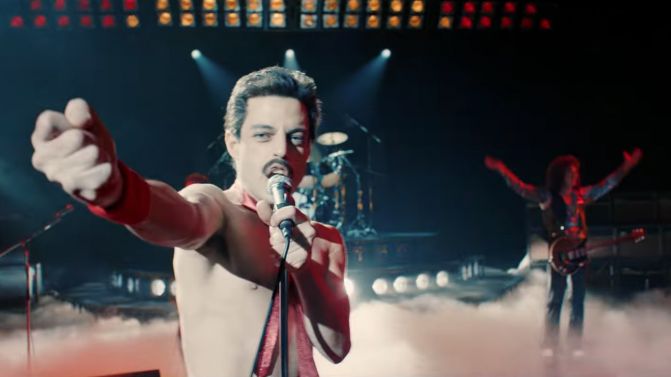
In another scene in Bohemian Rhapsody, lead guitarist Brian May has band members join him on a studio riser and begin stomping their feet and clapping with their hands to the now famous beat of “We Will Rock You.” May explains that he wants the fans to be able to participate more in Queen’s concerts, since they’ve already been trying to sing along with some of the band’s songs. What instruments does the average concert-goer have? Feet and hands. The audience is intentionally being invited to be part of the band, part of the musical experience.
The fact that participation is being made intentional here is noteworthy, since the crowd has gathered not to hear one another’s voices, but to hear Freddy and the band. Yet the recognition of what spectator participation does to enhance the overall concert experience leads Queen to purposefully incorporate crowd involvement into their act. Both band and audience participate in something bigger than what either could produce on their own.
Concert or Corporate Worship?
Back to corporate church worship. Above I proposed that corporate worship is not to be confused with a Christian concert. I’m not opposed to concerts, Christian or otherwise. They can be enjoyable, encouraging for faith, and simply fun. Why not? But concerts are not corporate worship, which exists for another purpose.
One criterion, for example, that I believe corporate worship needs to fulfil is to make the congregation appreciate that they are communally the body of Christ, the people of God. They must not only know this rationally (e.g., from points in a sermon), but must learn to feel this deeply and (eventually) intuitively. This can be encouraged in a number of ways, but our focus here is only the corporate worship context. In this setting the formation of the sense of communal belonging happens by actual participation in worship together, corporately.
Worship structure, including music, that does not encourage this bonding (what the NT calls “fellowship”—a shared value of spiritual commitment) may actually work against forming participants into thinking and feeling themselves to be members of God’s unique people. In other words, if the structure encourages the regular practice of being an observer, rather than a contributor to the worship experience, then the worshipper will learn intuitively that Christians are individual observers. And perhaps even that worship is about “me and Jesus” and not all those other people who happen to be around me. (By the way, isn’t this exactly what we are inclined to learn when we turn down the lights in worship, so we won’t be distracted by those around us?)
In other words, it’s quite likely that confusing a concert model with corporate worship actually works against at least some of the goals of corporate worship. Rather than offering an alternative to the powerful social forces and rhythms of secular culture—which shape and form us to be, above all, autonomous individuals—the concert model in many ways simply reinforces these.
(Sidebar: To support the above paragraph, and outlining the power of habitual action for discipleship formation, I would highly recommend James K.A. Smith’s, You Are What You Love. He outlines a rationality for discipleship formation by arguing that we become like what we love, what we desire most deeply. Regular, repetitive individual and corporate behaviours have the most impact on shaping what we love.)
Remember the Audience
Where am I going with this? I believe that much current corporate worship is modeled on a concert framework and attempts to evaluate itself based on concert criteria: excellent musician performance and crowd enjoyment (with maybe some participation). I believe this approach to be misguided and in the long-term simply reinforcing of cultural values that we perhaps later try to unsuccessfully mitigate with points in a sermon. I don’t want to overstate this point, since God works powerfully through worship teams despite using the concert model, but I’m convinced it’s not the best practice for discipleship formation.
What is best (or at least much better) practice is for the musicians to bear in mind that the corporate worship context is for the purpose of corporate worship. It is intended to encourage as much crowd participation as reasonably possible in our sometimes very large gatherings. Yes, the worship leaders are still called to excellence, but excellence is evaluated not on performance or every aspect of musical ability being expressed, but in large part on how well the congregation was able to participate in giving honour to God with mind and body (and without having had to practice their singing in advance).
If the average congregation attendee can only with great difficulty sing the songs being used on a Sunday gathering, we just might want to consider whether this really encourages participation or not. If it hinders participation, then something needs to change; that is unless something we value more than corporate worship as discipleship formation is driving us.
In any case, Bohemian Rhapsody brought afresh to my mind the need to remember the audience. In fact in one more memorable scene (my son calls it magical) the band is performing in Rio. The Portuguese-speaking audience spontaneously beings singing the English words to “Love of My Life.” Now, please ignore the fact that the film presents this concert probably a full ten years before it actually happened. (Remember, literary device! And to watch this magical moment from Rio in 1985, see here.) My point is that in the movie Freddy Mercury serves as an excellent example of one leading a crowd to sing a song together. He hardly even sings much of the song, even using his hands and arms to guide the crowd, since he knows he is no longer performing but leading. If Freddy could recognize a difference between performance and participation in his concerts, then maybe there’s something to this distinction after all.
Creativity Serves Worship
One more thought. Perhaps we can put both these ideas together: celebrating and encouraging creativity for the purpose of corporate worship. Creativity in this case will entail hard work and sacrifice, but will more intentionally be directed to an end—corporate discipleship formation. Here creativity does not exist for its own sake, but deliberately serves a bigger purpose. It may even recognize that constant innovation in corporate worship is arguably not best practice for long-term discipleship formation; creativity needs to serve a larger framework.
One application that I would encourage is that those creatively gifted in composing music and lyric-writing aim especially to write pieces that are not only biblically faithful (notice I didn’t say theologically complex), but also that are easy to sing corporately for the average person. Create songs that encourage maximum participation, with the goal building up one another into Christ’s body (Eph 4).
Who knew that Freddy Mercury could teach us so much about leading worship?
I’ve been arguing that we sing too much about ourselves in worship and not enough about God. Worship, instead, needs to be viewed as formational and as such should be more thoughtful and in general be structured around the story of God.
But a possible objection here might be that this approach sounds overly cerebral or maybe even too pragmatic. Isn’t an approach that makes worship serve the goal of Christian formation (discipleship) simply making worship a means to an end? And how would this possibly fit into a Pentecostal approach to worship?
Well, what is a Pentecostal approach to worship? Pentecostals have always had a subjective, experiential leaning in their spirituality and worship. From early on (although not so much lately) Pentecostals emphasized personal testimonies as a means by which to pass on their faith. Do we need to give up this rather subjective component of worship? I don’t think so.
Jean-Jacques Suurmond in Word and Spirit at Play, argued that Pentecostals (and charismatics) approach worship as “play.” Worship is not a means to an end, but an encounter with God. But as “play” (or a game) it is built around both rules and structure (Word) and spontaneity (Spirit). Pentecostals have emphasized the spontaneous aspect of worship, but their worship has never really been “unstructured.” (See Daniel Albrecht’s Rites in the Spirit on this.) For Pentecostal worship to work, it always had to have had a basic framework in which the spontaneous elements were able to be exercised. I’m suggesting that singing about God can help provide the structure in which the subjective aspects of worship (and song) can then be celebrated.
So, I am calling Pentecostals to be more intentional about making worship be more God-centred so that we can be formed into better disciples. I’m not calling for a removal of the holistic, physical, celebratory approach that characterizes Pentecostal worship. And certainly worship must be viewed as being an encounter with God. But for worship to be encounter with God it must be about God.
Let’s put it this way. The call here is not to move from non-formational worship to formational worship. All worship is already formational. The songs we sing, the prayers we pray, spontaneous or not, already are forming us in some way. Worship cannot help but be formational to some extent. And so, the call here is simply to recognize it as such. Once we acknowledge this, we will hopefully take more care to make sure it is helping to form us to be what we think it is that Jesus wants us to be/come. And I don’t think this can happen with the current glut of subjective-focussed songs.
One more implication. If what I’m saying is right, I think this will have some practical repercussions not only for what we sing, but also concerning who we place in charge of leading our congregations in worship and singing. If worship is about encounter with God that forms us into the people God desires us to be, and this is to be shaped by a focus on God’s story, then those who lead us must be people familiar with God’s story in a deep and profound way. Further, those who lead worship must know how to lead people into worship that has God as the subject matter.
Worship is such an important component in Christian formation that musical giftings just might not be the first quality that is needed in a worship leader. Worship leaders first of all need to have a good grasp on Scripture and the Christian tradition. Musical abilities are important, to be sure. But the task of leading people into God-centred worship entails not primarily musical skills, but theological and pastoral skills. So, all worship leaders must continually be growing in their knowledge of the story of God and how to translate this into meaningful words and actions for the people of God with the dual goals of encounter with God and Christian formation always in view.
Let’s move toward making God, not ourselves, the centre—the subject matter—of our worship.
Admittedly, more than a little time has passed since my last blog.
But let’s think of this blog hiatus not so much as a matter of my being negligent, but more so of a long dramatic pause, in which anticipation has been building. Sort of like the year-long interlude between installments of The Hobbit or Hunger Game movies.
This interruption raises some issues of continuity, of course, particularly because this instalment is a second part of a previous blog on worship. So it might be worth re-reading the first part. But without further ado, let’s get to it.
My contention to this point is that in Pentecostal (and broader popular evangelical) worship the subjective dimensions have been emphasized to the detriment of the objective. I’ve demonstrated what I mean by the “subjective” in my previous blog, namely having ourselves (humans) as the subject matter of our songs and prayers. Now I need to explain what I mean by “objective” and why it’s so crucial. Both aspects are necessary for properly formational worship, of course, but I think the objective dimension deserves priority.
By the objective dimension I am referring to God’s story being the focus, the subject matter, of our songs. This is the story we find in the Bible, and the story into which we find ourselves invited.
Subjectively-oriented worship songs highlight our personal relationship with God, through Christ by the Spirit, as an element of being included in God’s story. But this subjective dimension needs to be framed by God’s story lest we get the impression that all that matters is my personal relationship with God (and, more narrowly, the state of my internal psychological dispositions in that relationship). God’s story, the objective dimension of worship, is what gives meaning to the subjective dimension.
A focus on the objective dimension of worship means giving ample attention to God and his story. God’s story is found in Scripture. The Bible tells his story—his desires for humanity and creation, his plan, through Jesus, to redeem what has been broken and lost. The Bible does not simply make abstract statements about God (e.g., God is love), but places these in the context of a story that demonstrates the actions of God as, say, loving. What this means is that we don’t really know God unless we know his story. His story reveals his identity. Abstract concepts do not.
This implies that it is necessary but not sufficient simply to have the name “God,” “Father,” “Jesus,” or “Holy Spirit” in our songs. The subject matter of what we sing must not simply make offhand reference the proper names of God, but must actually revolve around God and his story. So, we need to ask ourselves about the subject matter of our songs. Is the song primarily about us or about God and his story? If the songs we sing in worship do not actually reiterate the story of God, then those singing will simply provide the content (from our imaginations) of what these names, or other abstract concepts, mean.
(So, it might not be a bad exercise to do a longer-term review of the songs regularly sung in our churches. In the past three months what has been the primary subject matter of our songs? God and his story, or us?)
The above may seem to be a fairly abstract way of talking about worship. But here’s what it practically implies for what we do when we gather together. In large part corporate worship is to be a reiteration or re-telling of the story of this God and his actions in history, with special attention given to the story of Jesus, through whom God’s redemptive plan is worked out. It is this that actually shapes the people of God to be what God wants them to be.
Assumed in what I’m saying here is a philosophical commitment that needs to be made explicit: I believe that worship needs to serve the ultimate purposes of discipleship and Christian formation. Worship ultimately serves discipleship. So, if worship is deficient, so too will be the discipleship of those regularly participating in that worship.
Here I’m not saying anything new. The church has always said that the “rule of prayer is the rule of faith.” In other words, the way we worship is what we believe; or, the way we worship shapes what we believe and who we are. But this means our worship needs to be theologically thoughtful and practically intentional—far more so than it often is. A couple good resources on this are the late Robert Webber’s, Ancient-Future Worship, and from a more pentecostal angle (note the small “p”), Glenn Packiam’s Re-Forming Worship.
Worship, then, is to serve to regularly retell and even re-enact the story of God, so that we are again and again (and again) reminded of the God with whom we have to do. Only in this way will our individual lives as followers of Jesus be properly given context. We will be drawn into a story that is much bigger than our own lives, and a story that in fact gives our lives meaning. In short, worship will help form us into the people—corporately and individually—that God intends us to be.
And this can only happen if the primary subject matter of our worship is God.
This view might well raise some objections and questions—particularly from Pentecostals, who might object that this view sounds too cerebral. I promise that’s not what I’m suggesting. But we will need to wait to address such concerns until the next installment, which I promise (pinky-swear) will not be long in coming.
I believe in worship. It is crucial to the Christian faith, and for the formation of both congregation and individual believer. What Christians do in worship tends to shape attitudes, beliefs and behaviour, perhaps even more so that listening to teaching or a sermon. So, worship is important. It’s so important that we should ask, from time to time, whether our worship is forming us into what God would want us to be(come). I’ve been asking myself that question. Here’s what I’ve concluded.
I believe a great deal of worship today is overly focused on us, and because of this it contributes to deficiencies in Christian formation.
Let me explain.
First, what do I mean by “worship”? I’m aware that in recent years there’s rightly been emphasis on “worship” being what Christians do (are supposed to do) in all of life. This is intended to deliver us from the notion that attention on God is something that only happens during church services, whereas in reality our whole life matters to God. I get it, and believe it. But here I’m addressing “worship” in its more narrow sense—the times Christians gather corporately to proclaim the worthiness of God through song, prayer, Scripture reading, and so forth. Even more narrowly, I have singing in view, since that has always been one of the favoured worship expressions in the church, especially within Pentecostalism.
Second, to narrow things still further, I’m primarily speaking to Pentecostals here. That is the tradition to which I belong, and overwhelmingly my church-going experience has been in Pentecostal churches. It’s familiar turf for me, and so I’m more confident in speaking to this subtradition. At the same time, evangelicals can probably be included here, since Pentecostalism has increasingly influenced the broader evangelical spectrum. (See here.) So, my thoughts likely apply to a wider Christian audience.
But enough of these preliminaries.
My belief, again, is this: our worship (singing) is, at times, excessively focussed on the ones doing the singing. Put another way, I mean that at all too frequently the subject matter of our songs proclaims our human story(ies), while too often neglecting the story of the one for whom we have gathered to worship, namely, God.
The songs I have in mind here are ones that emphasize our experience with God (usually personal, less often corporate—another issue I’ll take up another time). The lyrics frequently highlight our internal psychological state (i.e., how I feel about God, or my relationship with God, or even how I feel about how I’m feeling). With rare exception such songs are generally celebratory (not lamentations—how did those ever get into the Bible?!), emphasizing everything from personal life transformation to intimate ecstatic or even romantic moments with God. In short, these songs are often highly personal, internal, and emotion-focused. The content is primarily a reflection on one’s personal journey, and/or internal psychological states with regard to relationship with God. The subject matter of these songs is about us.
Now, human stories do provide an important element in worship—let’s call this the subjective dimension of worship. When we sing about our life of faith, our feelings about God and so forth, these are important expressions. Pentecostals have reminded the church globally that it’s right to celebrate God, and even testify concerning our experiences with God.
Pentecostals have always believed that spirituality involves more than the mind—the body and emotions also matter. And so worship involves not only mind, but also how we feel, and our physical gestures (hands raised, shouts, dance, tears, etc.). It is this physicality that has bled over into evangelicalism. Observe worship in many evangelical churches and services today, and you’ll notice people raising hands, moving their bodies, and proclaiming praises aloud. Such things are evidence of the Pentecostalization of evangelicalism.
Pentecostalism, in the early days at least, also prided itself on telling and hearing personal testimonies of how God was working in the lives of believers—bringing healing, conversions of a prodigal loved one, and fresh baptisms of the Spirit. In doing God became not simply a point of doctrine for many believers, but a living reality. God was one who was involved in all of human life, interrupting the course of things to transform and touch hearts, or to bring inspiration and healing. So, it only made sense to testify, robustly, about such experiences in word and song.
And all this is good—so far as it goes.
But testimonies, in word or song, especially once they become focussed on internal psychological dispositions, can lose their location in the broader and more important story for Christian formation: God’s story. Let’s call God’s story the objective dimension of our faith and worship. It is this dimension that I fear is largely being neglected to our long-term spiritual detriment.
I’m not sure of all the reasons, but we sometimes tend to believe that the best worship is that which expresses our personal feelings. Again, I’m not against expressing emotions in worship. After all, why wouldn’t we? And of course God wants us to be sincere in worship. But let’s not confuse heartfelt sincerity with worship that is in “spirit and truth,” as Jesus says (Jn. 4:24).
Let’s face it, sometimes worship songs can even become downright sappy. In my more cynical moments I’ve wondered if certain songs have been composed by a group of 16-year-old girls who have just watched the entire Twilight movie series in one sitting, replacing the name of some dreamy vampire with “Jesus” (if Jesus’ name appears at all—usually it’s just a pronoun: “he” or “you”).
Okay, enough cynicism. But let me provide one ironic illustration of how, even with our best intentions to focus on God, we still end up singing about ourselves: Matt Redmond’s 1999 song, “Heart of Worship.”
My point is that the song is ironic. A friend pointed this out to me a few years ago. Look at some of the lyrics.
When the music fades And all is stripped away And I simply come Longing just to bring Something that’s of worth That will bless your heart
I’ll bring You more than a song For a song in itself Is not what You have required You search much deeper within Through the ways things appear You’re looking into my heart
I’m coming back to the heart of worship And it’s all about You All about You, Jesus I’m sorry Lord for the thing I’ve made it When it’s all about You It’s all about You Jesus
The “heart of worship” is Jesus, according to the song. But the song is not about Jesus. The song is about a personal existential journey, away from being mesmerized by human performance to attention on the one for whom the music is being played. It’s a story about Matt Redmond, and based on how well the song caught on, a song about many, many of us. But the subject matter of the song is, overwhelmingly, not about Jesus, the heart of worship.
We are, I think, so used to the subjective dimension of worship—singing and hearing songs about our experience of God—that we simply might not realize we are sometimes neglectful of the objective dimension of worship. We are missing singing and hearing about God’s story. And it is detrimental to our spiritual formation, and the Christian faith.
That’s all for now (this is far too long as it is). I’ll say more about why I think this objective dimension is important in part 2 of this topic.




















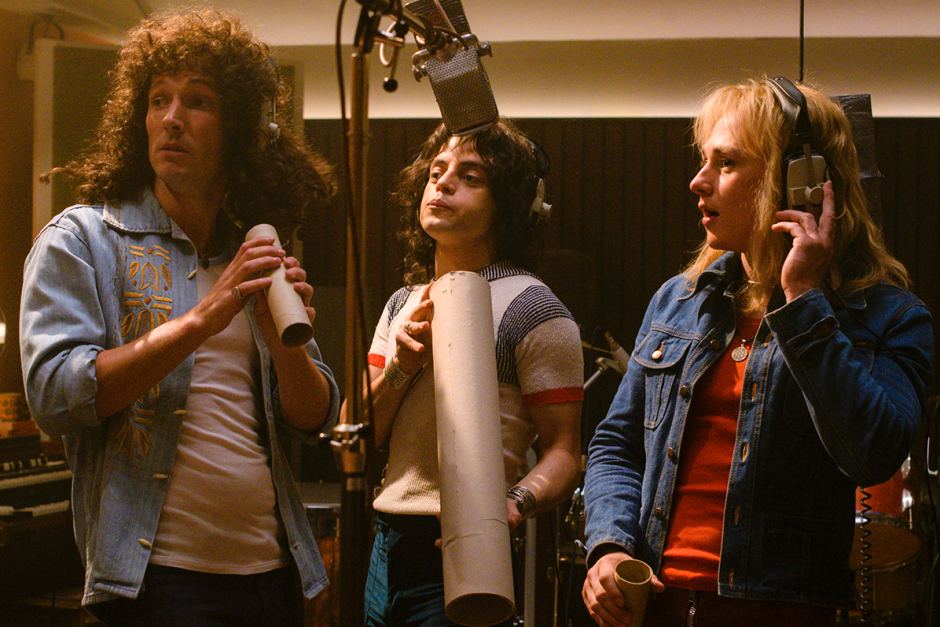 And so, we’re shown the young band members selling their only van to pay for time in a recording studio to produce an album. In studio, bandmembers strive to produce new sounds through experimentation—trying everything from swinging amplifiers suspended by a rope, to tossing coins on a drum. Whether Queen was the first to do this type of thing is irrelevant to me (remember, literary device!). The point is that they are portrayed as working hard, giving resources, time, and energy for the sake of creativity.




 Peter D. Neumann