How Not to Acquire Social Capital: Reflections on Acts 5:1-11, Pt. 3 of 3

(For part 2 of this series click here.)

Finding Ananias and Sapphira today

Does this type of sinful activity happen today within local church communities and denominations? Do people, even leaders, ever try to use force, status (position of privilege), or money to leverage the broader church community for self-serving ends, to gain more privilege(s)?

We would hope not, but if we’re honest, unfortunately, I think we need to admit this still happens. In such cases force isn’t as frequently utilized, since it’s less socially acceptable; but status and money don’t always raise as many red flags for us, allowing this duplicity and testing of God to still occur in ways analogous to the actions of A&S.

What might this look like today? I think we see parallels of A&S today whenever people use their status, heritage, or position to intentionally ensure that their voice is the privileged one in the room. It happens even in more crass forms similar to A&S, when an apparent benefactor promises a generous donation only if, or threatens to withhold a promised contribution unless, the benefactor receives what they desire.

When venomous leveraging is allowed to operate within the church, the community becomes poisoned, and its cohesion begins to break down, including its ability to bear true witness to the new righteous and truthful kingdom of Jesus. In short, unchecked manipulation within the community threatens gospel proclamation. That’s why Peter says that such “benefactors” may very well find themselves being used by Satan.

While people echoing A&S’s manipulative behaviour today don’t usually drop down dead, Satan still tries to influence the church in this way, and God still despises this type of action. We don’t need to wait for an act of God; Acts 5 provides the church with the object lesson.

How should the church respond?

What should we do if we suspect this type of behaviour is operating in our midst? Here we need to move slowly and carefully, since situations are often complex and not always easy to judge. Each case needs to be carefully examined on its own merit to avoid making errors of association with other cases that seem (but may not be) quite the same. We certainly need the Spirit’s help to discern any given circumstance.

The need for discernment

Perhaps the offending individual, for example, isn’t quite as callous as A&S, and their motives seem mixed — on the one hand they seem to be using manipulative methods to get their way, but on the other they seem to care about broader aspects of the church and its mission. The offender may even be confused and believe their manipulative actions are needed to acquire what they deem worthy spiritual goals for the community. They may not fully appreciate that God cares equally, if not more, about our methods than he does results.

Other times the circumstances are less complex, and it’s more obvious that moral violation through manipulation is happening (even if no one wants to identify it as such). In both cases the response of the church needs to be careful, yet firm. Members of the church need to be help accountable for this type of action, and all the more so if clergy engage in this behaviour, since the stakes are so much higher.

Understanding why we don’t respond

But why does manipulation and abuse of privilege of this sort often go unchecked in the church? One reason might be that we just don’t feel that manipulation of the community of Christ to be all that bad — at least not as bad as other sins. I use the word “feel” here intentionally, meaning that actions comparable to A&S don’t bother our conscience as much as other violations. But I would caution us here that this is due largely to how we’ve been socialized to feel about such matters, and may have little to do with how God feels about them.

Compared, say, to what my own Pentecostal tradition (with its holiness roots) identifies as worth calling out as significant sins — sexual immorality, financial fraud, inebriation from drugs or alcohol, and so forth — the sin of A&S should be right up there at the top of the list. In fact, if God’s reaction is anything to go by, the sin of A&S is worse than drunkenness or getting high, and arguably more significant than many other of the sins that would bring church members and certainly clergy under discipline within my own denomination.

Sometimes the hesitancy to expose and identify this type of sin is due to the idea that this type of behaviour manifests less explicitly than some other sins. It’s just easier to keep manipulation secret or ambiguous than it is a drunken brawl. But what makes identifying this type of sin a challenge, also what makes doing so very necessary. Sin that holds such drastic potential to damage the witness of the community, while at the same time being able to fly under the radar is very dangerous indeed. And just because identifying a particular type of sin may require extra effort or discernment is not a reason to throw up our hands and act as if it didn’t exist. Aside from this, I’m also not as convinced that A&S-type actions are as ambiguous as we might think they are, which leads to the next point.

Another reason that manipulation and abuse of privilege goes unchecked in the church has to do with the way communities operate to preserve their own existence. This includes pressure that encourages loyalty to the community as a moral duty, even when other known moral boundaries are being violated. In those circumstances, loyalty can supersede, say, fairness or justice (on this see Jonathan Haidt’s, The Righteous Mind, and to identify what matters to you most morally, try this test).

Perhaps, for example, the offending individual already has considerable status and influence in our church. Perhaps he or she has an enchanting and charismatic personality, or comes from a respected family heritage. These features serve to build abundant social capital, which is why such individuals can afford to “spend” (so to speak) some of that capital when using manipulative behaviour, and be fairly confident the community will (should!) tolerate the selfish ambition.

But perhaps the community simply needs the benefactor’s money, and so a blind eye is turned when it cost some communal integrity to receive the money. Or perhaps the cost of calling out manipulative behaviour is just too high. Calling things out can mean loss of significant social capital, especially for a lone whistle-blower (maybe even damaging a career). But perhaps we just don’t want to rock the boat, cause dissension, or be accused of gossip and slander.

Dissension, gossip, and slander are certainly something to avoid, since they too are devilish. But Peter’s response to A&S committed none of those sins. Peter spoke the truth, the truth revealed by the Spirit of truth. His Spirit-led response exposed the true motives of A&S, while at the same time exhibiting what the church community should and should not be.

Peter’s courageous response did not keep the immediate peace. He believed this type of sin required a response that just might rock the boat. But his actions did protect the longer-term peace, integrity, and witness of the church. It kept the devil out of the church, at least for the time being. Luke’s account of this story highlights the importance of calling out this type of sin.

A courageous community

What happened to A&S also, according to Luke, made others think twice about joining the church. Do I really want to live in a community where I can’t use my status, money, and privilege to move my way up and get what I want? I can use those methods pretty much any other social grouping; why would I want to give up that type of power?

The early church, it seems, was not the community for everyone. Well, it was for everyone, but it didn’t operate according to everyone’s preference. But for those with a heart changed by Jesus, it was a community of truth, peace, and joy.

Acts 5:1-11 calls the church to vigilance. A community that exists to represent Jesus’ kingdom values needs to be mindful of the devil’s schemes, including the temptation to use manipulative means to acquire social capital for selfish ends. That community is called to have the courage to refuse to allow that type of behaviour to operate unchecked in Jesus’ church. This was important for the first generation of Christians; it’s important for us today.

How Not to Acquire Social Capital: Reflections on Acts 5:1-11, Pt. 2 of 3

(For Part 1 of this series click here.)

A difficult story

I offer the following as some key summary take-away points for understanding Acts 5:1-11, along with some suggestions for recognizing the behaviour of A&S in our own lives and contexts. What we ought to do about such behaviour is something I’m still prayerfully considering. (But I think I’m in good company in exploring the ramifications of this passage, with many Christian leaders currently speaking out about all manner of corruption, and abuse of power and privilege these days [e.g., racism, etc.]).

Why so violent?

To start, this passage is not an easy one for a couple of reasons. First, people instantly dropped down dead for their actions and it freaked everyone out (and it gives us chills today). This seemingly over-the-top response by the Holy Spirit to sin seems difficult to square with Jesus’ loving message and actions. But I’m going to leave aside the troublesome issue of divine violence in this post so that I can zero in on the nature of A&S’s sin. Whatever the sin was, I think it’s pretty obvious that God views it far more seriously than our consciences might make us feel about it (and frankly God’s conscience matters more than ours).

What did they do?

The second difficulty is this. A&S’s sin is perhaps not immediately clear to us on first reading. It was likely far more evident for the first century hearers of the story, but for some reason not for us. We do know that whatever they did was pretty bad. But what the heck was it? And how do we not repeat it? And what do we do about those who do seem intent on repeating it today?

Deciphering the story

Let me summarize some points that have helped me decipher this story, and hopefully identify some reasons why I think it’s important for the church to pay attention to it today (especially for us Pentecostals, since it’s only three chapters after Acts 2!).

1) The problem in the story was not about money, but how money was being (mis)used.

This story involved, but isn’t really about, money. So, it is not a story to be used to “encourage” people to give away all their money, or even a lot of money, to the church. Peter makes it clear to A&S, giving to the church was voluntary. The problem was what they tried to do with their money. A&S were using their money to portray themselves as generous and whole-hearted devotees to the community, but they were were being duplicitous, lying to the church and God.

Why try to portray yourself as something you’re not, and spend a lot of money in the process? A&S believed their money could be used to purchase something more valuable. What exactly was it?

2) Ananias and Sapphira were not acting in ignorance.

Before answering the above question, we need to note that both A&S consciously conspired to misrepresent themselves, and lied when confronted about it. So, this is more serious, it seems to me, than someone misrepresenting themselves out of fear (e.g., Peter’s fear-motivated denial of Jesus). This was premeditated deception with a clear agenda in mind.

This does not mean, however, that A&S fully understood the ramifications of their deceit. At risk of getting ahead of ourselves, they were acting in a manner that might have been considered acceptable in a culture where status and its privilege was something considered worth acquiring. Nevertheless, they were not ignorant, and they knew they were doing wrong, evidenced by the fact that they tried to conceal their actions using deception.

It’s noteworthy here that many times (but not always) when actions are kept from public light it is an indication that those involved know that what’s being hidden is unethical (= immoral); otherwise, why keep it hidden?

3) Ananias and Sapphira schemed to illegitimately acquire disproportionate “social capital”

Here we come to the heart of A&S’s motivation. The couple had previously witnessed Barnabas being honoured for his generosity and they wanted some of that notoriety (Acts 4:32-37). As a number of commentators note, A&S were likely seeking to gain acclaim within the young church (“What generous folks these are!”). But brief acclamation alone is likely insufficient motivation for this type of duplicity. Mikayla’s label of “social capital” helps expand what comes with the acclaim A&S sought. For them the deceitfully leveraging of resources would gain them abundant community status and privilege(s), along with increased influence (ability to get their way) within the community.

This type of social capital isn’t free, of course. But A&S had ample money at their disposal, and in most communities money usually comes with a measure of influence. All they had to do, they thought, was use some of their money to buy some social capital. But how much? Spending all of it seemed too high a price. Acclaim and privilege is one thing, but they couldn’t gamble it all. They needed some future currency for a rainy day. So, they figured that about half their money would be about right. A steep price to be sure, but acquiring privilege doesn’t come cheap.

Then Peter said, “Ananias, how is it that Satan has so filled your heart that you have lied to the Holy Spirit…”

Acts 5:3

Peter rightly identifies this attempt to manipulate and exploit the community of Jesus as satanic. The devil was trying to get a foothold in the door of the church (Acts 5:3).

4) Community manipulation is considered “testing” (presuming upon) God

Peter said to her, “How could you conspire to test the Spirit of the Lord?….”

Acts 5:9

A&S perhaps believed that God probably wouldn’t notice or care, or that he’d overlook their duplicity and manipulation. After all, they were bringing much needed money to a community in its infancy. It may even be the case that they thought their actions would be of ultimate benefit to the church (while simultaneously being personally beneficial). In that case the deception and money-leveraging was somehow pragmatically justified (if something brings about an immediate good end, we can probably overlook some indiscretions in the method). And after all, isn’t that just how things operate in the world everywhere anyway? If I find myself with resources that others don’t, such as abundant monetary or social capital, doesn’t this permit me the privilege of leveraging (manipulating) my capital to get more privilege(s)?

This was, as Peter says, putting God to the test (Acts 5:9). Was he truly a God of justice and holiness, treating everyone without regard for social status or wealth? Or would he look sideways as this type of community deception and manipulation tried to slither its way into the church?

As it turns out, A&S discovered that God really is no respecter of persons.

5) God upheld justice, while also protecting the fledgling church from power-politics.

Because the fledgling church was at high risk of being permanently damaged at such a fragile stage in its development, God intervened in a radical way. God’s reaction was not simply tied to his aversion to injustice and lying. The deaths of A&S served not only as their judgement, but also as an act to protect the community and the gospel they carried (as well as a timeless object lesson). What was at risk here was nothing less than a potential sabotage of the newly formed church (Acts 5:11 is the first time Luke uses the word “church” [ecclesia] to describe this community).

A&S had shown they were not truly co-servants of the community, but instead were intent on using the community to serve their own interests and so demonstrating themselves disloyal (thanks to Stephen Barkley for helping me see this better). This is difficult for those of us in hyper-individualistic cultures to see at first. But God’s big goal is not simply the conversion of individuals, but the formation of a community of witnesses, though whom the message of Jesus as true king would be proclaimed and exhibited. This community would proclaim not only with words, but would bear witness by living out a distinct set of values.

The values of the community of Jesus would be contrary to what was commonly accepted in a pagan culture, in which people strove to “lord over” others. Sometimes this goal could be achieved by leveraging physical force, status, or money. Jesus had spoken against this very value system in Luke’s first volume, 22:24-27.

24 A dispute also arose among them as to which of them was considered to be greatest. 25 Jesus said to them, “The kings of the Gentiles lord it over them; and those who exercise authority over them call themselves Benefactors. 26 But you are not to be like that. Instead, the greatest among you should be like the youngest, and the one who rules like the one who serves. 27 For who is greater, the one who is at the table or the one who serves? Is it not the one who is at the table? But I am among you as one who serves.

Luke 22:24-27

To have permitted A&S to attain status as communal “benefactors,” while turning a blind eye to their deceitful and essentially pagan method for attaining social capital, would threaten to malform the impressionable young church from within. The very DNA, so to speak, of the church was in danger of being mutated into something monstrous. At risk was what it meant for the church to bear witness to Jesus, since they proclaimed a king that was unlike the kings of the world. Also at risk was community cohesion, since duplicity undermines trust. We cannot trust when we suspect that people are not as they seem.

So, this for me helps explain the radical reaction of the Spirit. He was protecting the church, and protecting the message of the gospel. But what does this mean for the church today? We’ll pick up this question in part 3.

How Not to Acquire Social Capital: Reflections on Acts 5:1-11, Pt. 1 of 3

Mikayla Neumann,
not Sapphira

It took only a few minutes after hearing the story for her to label what was quite likely the underlying motivation of the characters involved. The story was from Acts 5:1-11, of Ananias and Sapphira, a husband and wife who were members of the first century church. The story’s interpreter was my 20-year-old daughter, Mikayla. I was the story-teller.

But why would a father make his daughter listen to a paraphrased retelling of this odd story in the first place? Some context is needed.

What clergy do on Facebook

I belong to a Facebook group for credentialed clergy belonging to the Pentecostal Assemblies of Canada and Newfoundland/Labrador. I’d posted several questions in this group concerning the story of Ananias and Sapphira (A&S for short). I won’t rehearse all the details of this story (you can read it here). But in short, A&S attempted to deceive the early church about how much money they had in fact donated to the church. The deception was revealed to the apostle Peter (presumably by the Holy Spirit), and they both ended up dropping dead in what seems to be a direct act of God. Yikes!

My questions for my clergy friends were these. What was it that A&S actually did wrong that resulted is such an extreme conclusion? What was their sin? Merely lying? Death seems an overly harsh consequence in that case (didn’t Peter, after all, lie about knowing Jesus in the not to distant past?). But if not lying, then what?

It seems pretty important to figure this out, since whatever they were doing, God was unusually upset with it. Figuring this out might help us avoid doing whatever it was A&S were doing. And tied to this, what would this sin of A&S look like today anyway? Is this one of those ancient “sins” that no longer applies today, or does it still happen and matter today? And if it does happen, why don’t people keep getting struck down for it? Finally, how should the church respond if we’re aware of this type of sin taking place in our midst?

The story is not an easy one to interpret, which made discussion among this clergy group engaging and fruitful. We all (I think) learned some things, and it helped me sharpen my interpretation of the passage.

Late night chat with Gen Z

Later, during a late night chat with my daughter, I got the fun idea of presenting her with the same questions I’d posed to the clergy. What would a member of Gen Z think about the A&S episode?

I paraphrased the episode, and then asked (maybe interrogated) her about what might have motivated the characters. On the surface we know that money and deception are involved. But what did A&S think they were going to gain from using money and deception?

After only a few minutes of banter and processing, Mikayla labeled the motivation as likely being tied to acquiring “social capital.” Mikayla is entering her third year of university, majoring in psychology, and minoring in anthropology and philosophy. Apparently her exposure to the social sciences were coming in handy for interpreting Scripture! (And I was pleased to see that our tuition dollars were being well spent!)

Social capital and manipulation

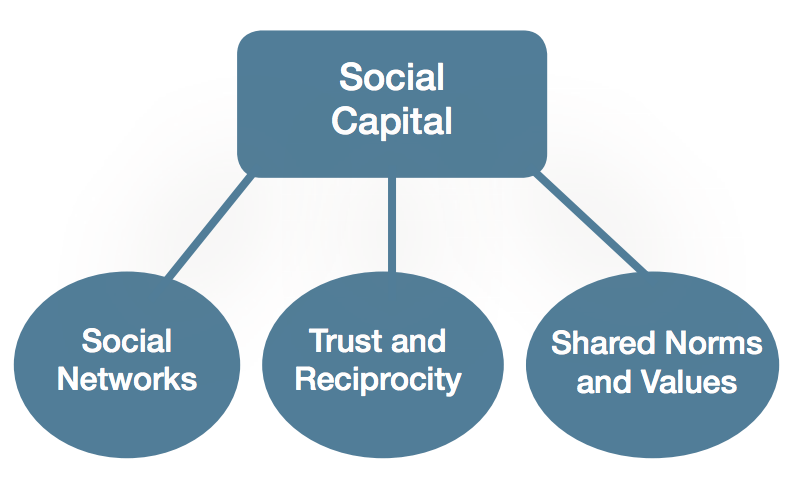
I’m not a social scientist and am open to correction here. But as far as I understand it, social capital is the term used among social scientists to describe how belonging to a society or group mutually benefits all involved, provided that you play by the rules. So, if I treat others well by, say, being trustworthy, industrious, generally supportive, etc., then, all things being equal, I will also benefit in various ways. Others will grow to trust me, share or trade with me, and help me when needed. In other words, by acting in a particular way (trustworthy, diligent, etc.) I gain social currency, which I can then redeem depending on the level of trust I’ve engendered in a given community.

So what does this have to do with A&S? Well, first, desiring the mutual benefits that come with communal belonging isn’t the problem. Jesus encourages his followers to be honest, generous people, who, as a result, will likely become the type of neighbour that someone would usually like to have around. But Jesus also said there are good and bad ways to engender others’ trust and loyalty. A very bad way to do this is by manipulation, either by force (physical or social), or by misrepresenting ourselves in a way that essentially leaves others with no rational choice but to feel and act as if they owe us something, mainly significant respect or honour, and the privilege that comes with it (see Matt. 5:33-37 and 6:1-18).

All that to say, when Mikayla said that A&S were trying to gain social capital, she meant this in the sense of trying to manipulate a situation in order to gain excessive or disproportionate power and influence within the early church community. A&S attempted to use money and deception to leverage influence and privilege(s), and that’s a very serious problem.

But to make sure I’m not rushing to impose a current social science interpretation anachronistically onto an ancient text, we need to unpack the story a little more. This will help reveal why I believe Mikayla’s hunch was correct, and why understanding this is imperative for the church today. We’ll explore this in part 2.

The Case of the Missing “Freewill” Offering

If you’ve spent any time in a typical evangelical or Pentecostal church, you’ve likely heard that Christians are called to give a “tithe” of their income to the church, but one may also give over and above, voluntarily, an “offering.” The tithe is expected; the offering is a freewill gesture. But is this involuntary/voluntary distinction between the tithe and offering supportable biblically, or is it more a distinction resulting from tradition or pragmatism (i.e., it’s a convenient and helpful practice)?

Dr. David A. Croteau

(If you read to the end you can give your feedback in a brief poll, so read on!)

I’ve just finished reading, You Mean I Don’t Have to Tithe?: A Deconstruction of Tithing and a Reconstruction of Post-Tithe Giving, by David A. Croteau (a book in the McMaster Divinity College’s Theological Studies series). For one raised in a tradition that assumed tithing to be an established biblical principle, applicable from the time before Moses to the current day, I’ve found this carefully researched study to be both challenging and refreshing. Related to the above question, Croteau is helping me rethink the tithe/offering distinction.

Tithing Then

For context, many Christian today understand tithing as the practice of giving one tenth of one’s income to one’s local church. This practice is usually grounded in certain Old Testament Bible passages that mention God’s people, both before and during the implementation of the Mosaic law, as giving a tithe of their resources indirectly to God. I say indirectly because actually the resources were given to people whom God had designated to be recipients of the tithe.

For example, the Levites were a tribe of ancient Israelites who were called to dedicate themselves to religious service. But this meant that unlike other tribes they had not inherited any land (aside from four dozen cities) on which to grow their own food. Non-Levite tribes were to tithe of their resources (specifically, the produce of the land, with other forms of income not being mentioned) so that the Levites might have food, and be able to dedicate themselves explicitly to sacred ministry. It was God’s way of ensuring that the Levites shared an inheritance along with the other tribes.

Aside from tithing 10% to the Levites, ancient Israelites were required to participate in other regular tithes, which, according to Croteau, totaled about 20% of their resources (others report a bit less or a lot more, but 20% seems a reasonable number here). So where did the idea of only a 10% tithe come from?

The 10% cap is often tied to pre-Moses Israelite history. Here Abraham serves as the prime example, having given 10% of his spoils of war to the enigmatic priest, Melchizedek. Croteau does note that Abraham’s tithe is only ever mentioned as a one-time event and not a regular practice, but leaving that aside, the point here is that the 10% number used here has become a firmly established biblical directive for Christian giving today. But how exactly did that happen, and how did the sharing of agricultural resources expand to include other gross income?

Tithing Now

The popular application for tithing today, as far as I understand it, reasons by analogy more or less along the following lines.

  • Just as ancient Israelites tithed to a group overseeing sacred work (Levites), so too must Christians today tithe to support sacred and Christian missional work.
  • Nowadays, since pastors and/or church staff function in ways roughly analogous to Levites, tithes should go to the church to support the pastors/staff and the general work of the church.
  • Further, since we don’t function primarily as an agricultural society, we don’t give the fruit of the land, but a percentage of our earned income (and I will skirt the gross vs. net debate here).

The tithe, again, is considered a requirement for all Christians, often regardless of one’s financial situation. To not tithe is often deemed as stealing from God, based on a very literal application of an OT text, Malachi 3:8 (which we will return to shortly). So, in this logic, tithing is important and negligence of this duty is no small matter.

Interlude: Giving Is Good

Let me interrupt briefly and say at this point that I’m all in favour of supporting pastors, teachers, and church ministries with ample giving. Generous giving is needed to help the church (and parachurch ministries) do what they’re called to do. Very often those called to such ministries are personally sacrificing much to be faithful to their God-given callings, and the corporate church needs to share in supporting the ministries they believe should be operating, including caring financially for those who have given up other opportunities to serve in this capacity. The New Testament (NT) clearly calls Christians to do this. So, this post should not in any way be viewed as questioning the necessity of sacrificial giving of all Christians to support the local church and other charitable ministries.

In fact, while Croteau does propose that we ditch all tithing language for Christians today and recognize that we live in a post-tithe era, he nevertheless argues that generous and sacrificial giving is a crucial practice for followers of Jesus. In the place of tithing he argues that the NT provides very good directives that, if accepted, should lead to greater generosity among Christians. He anticipates that following NT giving principles, rather than tithing, would lead many believers to start giving more than an obligatory 10%.

My purpose here, however, is not to explore those NT directives, and so I recommend that you read his book and see what you think.

And now back to the point.

What’s the Deal with “Offerings”?

As noted, a favourite go-to passage in support of present-day tithing is Malachi 3:8-10:

“Will a mere mortal rob God? Yet you rob me. “But you ask, ‘How are we robbing you?’ “In tithes and offerings. You are under a curse—your whole nation—because you are robbing me. Bring the whole tithe into the storehouse, that there may be food in my house. Test me in this,” says the Lord Almighty, “and see if I will not throw open the floodgates of heaven and pour out so much blessing that there will not be room enough to store it.

Malachi 3:8‭-‬10 NIV

Croteau thinks that Malachi 3 is simply been misused when directly applied to Christian programmatic giving today. But again you’ll need to read his book to explore the reasons why. Here I just want to focus our attention on the two key words at the end of v. 8 — “tithes” and “offerings.”

We’ve already surveyed how the concept of tithe is often applied today. But what about “offerings”? After all, both tithes and offerings appear in this very same passage, and so if one is deemed applicable for today, to be consistent, so too should the other. And indeed what I’ve heard pretty much my entire life is that both of these terms can be applied to Christians giving today, but with an important distinction. One type of giving is assumed obligatory and the other not.

To recap, tithing (10% of one’s income) is obligatory for the Christian. That is the minimum expected. But one doesn’t have to stop at 10%, and may also give more, although one is not required to do so. Anything given over and above the tithe, then, is given voluntarily (freely), and is labelled an “offering.” In short, how this is generally conveyed in many churches today is that the tithe is expected of every Christian believer, but offerings are a freewill gift that Christians may give over and above the tithe minimum. Some churches may even teach that tithes are for general church operations, but offerings are over and above, and may be applied to such things as giving to missionaries, building programs, special outreach events, etc.

In any case, these two types of giving — obligatory and freewill — find their biblical basis and defined distinction in Malachi 3.

Or do they?

No Freewill Offerings?

Croteau gives us reason to be less certain of this involuntary/voluntary giving distinction (and oh how we hate uncertainty!). He notes that the offerings in Malachi 3:8 would have been understood in that context not to be freewill gifts over and above the tithe, but instead as a different category of obligatory giving. Offerings, he explains, were particular donations designated to support the priests in their temple duties, in the form of sacrificial foods (e.g., meats and bread cakes). This category of donation is exemplified in what are known as peace offerings, wave offerings, and so forth (Ex. 29; Lev. 7). But contrary to being optional, says Croteau, “Like tithes, these were compulsory contributions required by the Mosaic law for the temple staff.”

…the offerings in Malachi 3:8 would have been understood in that context not to be freewill gifts over and above the tithe, but instead as a different category of obligatory giving.

So, “offerings” were not freewill in contrast to obligatory tithes. Rather, both tithes and offerings were required of Israelites. There was not, at least in the Malachi passage, any idea of a distinction between involuntary and voluntary giving. Again, it was all obligatory.

And aside from Croteau’s historical-cultural observation, it seems to me that this makes better logical sense of the passage as well. One can hardly be accused of robbing God by witholding freewill offerings that one was never obligated to give in the first place, right?

So, the common idea that tithes and offerings are categorically different based on distinct motivations (involuntary/voluntary) cannot be supported by Malachi 3:8. We might look elsewhere in Scripture to support giving over and above what was expected in ancient Israel, but not to Malachi.

Well, so what if both these and offerings are obligatory in Malachi? Glad you asked.

Options for Offerings

If tithes are required today, based on Malachi (and other texts), then why not offerings too? But then we must ask, what exactly would be analogous to an offering today? Remember, an offering is not simply a freewill gift. It is obligatory as much as the tithe. So, if the tithe is 10%, then what ought we to require with regard to the offering?

We have several options. Here are three main directions I think we could take.

1) We could continue to assert that “offering” means a freewill gift, over and above what’s required in tithes. But if Croteau is correct (and if the logic of the passage is to remain coherent), we would have little textual support in Malachi for doing so. We could stop using Malachi for this distinction, however, and maybe that would solve the problem. Although that might also mean coming up with another term other than “offerings” for this type of freewill gift, since Malachi is the one who provides the term.

2) We could, alternatively, stick with Malachi and introduce an “offering” requirement in churches on top of the tithe. This would entail deciding on a fixed amount or percentage that seemed reasonable for the obligatory offerings. So, every believer would be expected to give a 10% tithe and X% in offerings. But that idea might not gain traction quickly, and I’d prefer not to be the one to introduce it!

3) Another option is to simply say that, in contrast to the tithe, the offering in Malachi is no longer obligatory — it was a required sacrifice then, but this requirement no longer applies today. But there’s a consistency problem here. On what grounds would we say obligatory offerings do not continue, when we use the same Malachi passage to largely ground the continuation of tithing?

Which of the above three options do you think would be the most supportable and helpful? How would you overcome the difficulties in selecting that option? Or, what other options might be a way of solving the case of Malachi’s missing “freewill” offering?

A Poll!

There are two ways to respond here. One is to leave a comment. The other is to respond to the quick poll below so we can find out what you’re thinking about this topic. Please take a few seconds to respond to the poll. Thanks!