Chuck DeGroat’s, Narcissism in the Church, is a much needed book for the church, especially during a growing awareness among Christians of the damage that can be done by abuse of power and authority. Narcissists in church leadership often are perpetrators of this type of abuse, and are far too often enabled by the people and systems around them.
DeGroat skillfully defines what narcissism is and is not, using current accepted definitions within psychology (e.g., DSM5), although he also uses his years of expertise as a psychologist to introduce new insights for understanding this personality disorder. For those who are fans of the Enneagram, DeGroat even dedicates a chapter to demonstrating how narcissism can exist in people in any one of the nine E-types. Perhaps most intriguing is his proposal that narcissistic tendencies have high representation among church planters and mega-church leaders. This is an important point that likely needs to be taken seriously by denominational leadership when assessing potential ministry candidates.
Dr. Chuck DeGroat
DeGroat’s work provides significant support for those hurt by the narcissist, perhaps primarily by helping them realize that they are not imagining their emotional injuries. The narcissist and the enabling system (and those enabling the system) are culpable.
At the same time, while DeGroat is trying to raise awareness of the church narcissism problem, he also is more optimistic than many that narcissists can be reformed (although this is a slow and painful process). In part this is based on his proposal that narcissists are deeply hurting people, who are unable to face their real selves. This dis-integration is what lies beneath their destructive behaviour.
I would have liked DeGroat to have provided more data to support this position. While I’m not opposed to this explanation, primarily because I respect his expertise, I tend to be a bit skeptical with approaches that claim a motivation for a psychological issue that appears opposite to the manifestation. Jean Twenge’s, The Narcissism Epidemic, for example, argues that narcissists are motivated not by poor self esteem, but by a deep infatuation with themselves. DeGroat does not quite identify poor self esteem as what gives rise to narcissism and his arguments are more nuanced. But he does lean towards there being a shamed and frightened child beneath the narcissist’s exterior. It would have been appropriate for him to provide more support for his position, even though this book is intended for a more general, non-academic audience.
Overall this is an important book for pastors and church (and denominational) leaders to read, not merely for information, but in order to implement better systems by which to help identify and introduce protections against the damage narcissism can bring.
I recently reviewed Jacob Shatzer’s, Transhumanism and the Image of God, for Pneuma journal. It’s an important read for Christian leaders for a number of reasons. I can’t post that fuller review here, but will highlight some take-aways to perhaps pique reader interest.
Technology and Transhumanism
First, Transhumanism is a philosophical movement and ideology. It is a worldview, argues Shatzer, that holds a highly optimistic view of human progress. But the ongoing progression involves the freedom to integrate tools of technology, especially digital forms, into the process of human enhancement and development.
Second, for Transhumanists technology is viewed as an indispensable tool for human advancement, and humans have a right to unrestricted use of technology. This includes the right to modify one’s body or even brain using technology. Tech-integration allows not only for new ways to experience reality (through virtual and augmented reality), but holds potential to redefine and create new realities. Transhumanists celebrate the idea that we might one day be free to either clone or upload our minds onto non-biological substrates. In other words, maybe being biological is not necessary to being human after all, and perhaps a decent hard drive or advanced robotic body will suit us better.
Third, all use of technology shapes the user in some way. This is one of Shatzer’s key points in the book. Every technology has a purpose, a goal, whether hammer or smartphone. Further, no technology is neutral. Using any technology means giving up something else (i.e., the ability to be free of the goals of given technology). If I use a hammer often, I tend to, as the saying goes, begin to see everything as a nail. Likewise, with smartphone in hand, everything becomes potential for a possible social media post, and I need to evaluate whether to do so or not. The tool in hand changes my focus to follow its functional purpose.
Fourth, uncritical use of technology tacitly leads humans to adopt the values and expectations of Transhumanism. Regular and uncritical use of technology will, over time, inevitably conform the user towards serving the purposes of the tool. And, whether I have heard the term or philosophy of “Transhumanism” or not, repetitive use of technology will shape my desires and beliefs toward being more open to transhumanist ideology.
Shatzer has a lot more to say about Transhumanism and the impact of digital technologies, but the above points stand out as highlights for me. In light of the above, we should make the effort to reflect more critically concerning our use of technology (and how it uses us). For Christians, it should lead us to evaluate how our personal and church lives are being shaped by our engagement with various technologies. A current example might help.
Virtual Bed Church
Right now we are learning how to live within the constraints of the COVID-19 pandemic health protocols, including physical distancing and (until very recently) the inability to gather together for corporate worship. Churches have done a lot of work to make virtual gatherings possible through use of video technologies. While this situation has led some to long all the more for reuniting in person, the experience of being able to meet virtually has also impacted expectations and possibilities.
Many are now used to virtual social interaction. And whereas four months ago, we might not have considered such to be a practically acceptable way to gather for worship, now we at least know we can do it, and perhaps even weigh the advantages and disadvantages of each delivery method more pragmatically (does this “work” for immediate ends?) than theologically (is this working for long-term ends revealed in Scripture?).
After all, virtual worship doesn’t even demand I get out of bed! (Or so I’ve heard 😁.) While that helps, say, with overcoming the immediate discomfort barrier of having to get myself to a gathering where I might need to interact with not only friends but strangers, is bed worship the best venue for helping me become more a part of the corporate temple of the Spirit being built by Jesus (1 Cor 3:16)? (Rhetorical question. Answer most likely “NO.”)
Embodied Worship
This image simply emphasises embodiedness and is not intended to suggest a form of worship that might vaguely remind the Christian fundamentalist of yoga. Please do not email me about this. Sigh.
Christian worship should always aim to be embodied worship as much as possible, for at least a couple of reasons. First, humans are created as flesh, and of the dust (meaning mortal in biology). This was God’s choice; he didn’t need to make us out of meat, but he did. Second, Jesus comes as the Son of God incarnate. Literally also enfleshed and made out of meat. Further, he currently reigns as risen Lord in the flesh. God has chosen to bond himself to the human race with our biological substrate.
The purposeful biological nature of humans should encourage us to be mindful as we engage with digital technologies in corporate worship. This is not to negate the usefulness of virtual technology for worship in special circumstances, such as connecting with those unable to participate in person with the congregation due to physical disabilities. But it does mean that the move towards virtual connection should remain an exception rather than merely an equally acceptable alternative.
Mindful Technology
I commend Shatzer’s book to Christian leaders. It will help us become more fluent in the cultural “language” of technology, along with the need to be more mindful of how we’re already being shaped by the technological tools we use. In turn, this should assist us in discerning when and how to implement technologies into our Christian worship and discipleship.
This post might generate some discussion. I hope so. The topic needs to be discussed, since so much of what we talk about in the church tends to be assumptive about what the church is created to be, and I think asking the question of the church’s purpose is an important one.
What has led me to raise this subject is reading CT editor, Mark Galli’s recent article, “The Church’s Sickness Unto Death.” In it he argues that the problem evangelicalism has had in recent decades in trying to move the church towards being more missional (with limited success) is that, “The church, from the start, has not actually been designed to be missional.” In fact, “when the church is conceived primarily as being missional, existing for the sake of the world,” Galli states, it leads to it becoming ineffective both in discipleship and worship, on the one hand, and in evangelism and social justice issues on the other.
The church, from the start, has not actually been designed to be missional.
Mark Galli
In short, the church was never really designed to do both, and Galli opts for the church as primarily being designed to help form believers into disciples, rather than an institution for social change. To be clear, it is not as if Galli is against social justice involvement or evangelistic endeavours. But he believes that parachurch organizations are better suited to be effective in those types of mission (and that Christians should involve themselves in such organizations as a matter of faithful discipleship). So, Galli’s model might look something like the image below that I pilfered from the internet.
This challenge to the missional focus so oft repeated in church circles these days will strike some as simply wrong-headed. What could be more intuitively obvious than the church existing to transform the world? For Pentecostals (my tribe), who emphasize the church’s call to be witnesses for Jesus (Acts 1:8), Galli’s words might be viewed as a sign of losing spiritual zeal for evangelism.
What is the church’s mission?
But before rushing to rash judgments, let’s take a step back and ask some important questions. And to be honest, in the discussion that follows, I’m not quite sure where I’ve quite landed on this issue. But I do know this: the matter of the design and purpose of the church is not a simple matter, and it is fairly easy to import North American pragmatism into our interpretation of Scripture, leading us to assume certain views of how mission should be accomplished are just obviously true. They are not; and we are required to give this more thought.
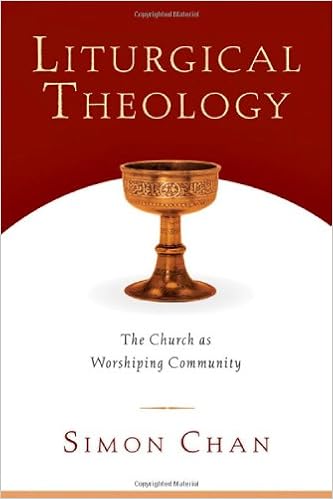
What I want to do, briefly, is show that Galli’s questions are not bizarre, or outside of a Pentecostal approach to church mission. So, in what follows, I’ll leave Galli behind and focus on the contributions of Simon Chan, a Classical Pentecostal theologian, who teaches in Singapore. In particular, his 2006 book, Liturgical Theology directly addresses the issues Galli is raising.
First, Chan strongly echoes Galli’s proposal that it is wrong to view the church as existing for the sake of the world. Chan puts it this way. We basically have two options theologically when it comes to understanding the church: either the church has been formed for the sake of the creation, or creation has been formed for the sake of the church. Get this wrong, and you will get everything else wrong about the purpose of the church.
Chan uses N.T. Wright as his foil (which causes me pause, because I really like Wright!). Wright takes the church-exists-for-creation approach, whereas Chan advocates for the creation-exists-for-the-church approach. Whereas Wright accents the Genesis creation story, Chan focuses on Paul’s broad scope summary of the purpose of the church in Ephesians. From Paul’s perspective, he argues, creation is formed in order that there would one day be a people of God (body or Christ, temple of the Spirit, etc.). Creation is important (and certainly not to be abused), but it is primarily the physical framework necessary for the church to be brought into existence. So, creation will continue (eventually as new creation), so that the church can continue eternally as well.
Church for creation?
This creation-for-church model, Chan argues, has always been God’s plan. To reverse the order makes the church into a temporary organization to help get creation back to where it should be. And, if the church isn’t doing this very well, then why not just join some other social justice organization? Pushed to it’s extreme, the church becomes just one of any number of social agencies, and perhaps even superfluous to God’s work in the world.
Now, I’m sure Wright would have a good response to this, since he is far more committed to the institutional church than the average North American evangelical. But I don’t want to go down the road of investigating Wright position. For my purposes, I think Chan has identified something very important, and something probably embedded into the assumptions of North American Pentecostals and broader evangelicalism. And it’s something we might never think to ask: does the church exist for creation, or creation for the church? How we answer this will determine our local church priorities.
Or creation for the church?
To clear up some potential misunderstandings, firstly, Chan is not saying that the world should serve the church. He is not seeking some form of return to Christendom, if I’m reading him correctly. He is only identifying the theological purpose (telos) of the church: creation was formed so that God could have relationship with a created people for himself in and through his Son, Jesus–the church.
Secondly, Chan is not saying that Christians should not do good in the world. Of course they should, and why wouldn’t they? This should be part of Christlikeness being lived out in daily life. So too, Christians should be involved in witness through evangelism. All believers should be prayerful about how to involve themselves in meaningful ways in the brokenness of society in all manner of ways. But the priority of the church corporate is to worship and form disciples, and in doing that, the church bears faithful witness to Jesus. To not do this means being a less-than-faithful witness.
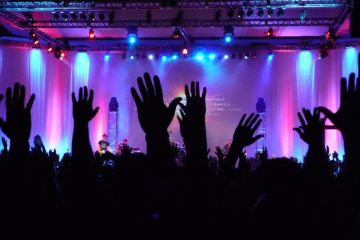
Side note: Chan would likely not endorse the concert worship model represented in this image. 🙂
This last point is worth a bit more explanation. It is often assumed that worship and discipleship is something other than witness, the latter being viewed as the activity of explicit evangelism. But in Chan’s view, the church is being a witness only insofar as it is truly representing the Trinity in the world as clearly as possible. The image of God is formed in God’s people through regular participation in thoughtful, intentional, theologically robust corporate liturgy. Worship and discipleship are inseparable for Chan, and only in being formed as the people of God does the church truly fulfill its call to bear witness in the power of the Spirit. And remember, Chan is a Classical Pentecostal.
What’s your view?
So, in sum, the church is called missionally to bear witness to the triune God by becoming formed as worshiping disciples more and more into the likeness of Jesus. I think this more or less summarizes key points in Chan’s view, and I think this is close to what Galli is getting at in his article. So, Pentecostals cannot simply dismiss Galli as ignoring the Christian vocation of witness; he is not. And in Chan we have at least one Pentecostal voice saying something remarkably similar.
The question is now in our court, and again, I’m not quite sure where I land on this one. How do you see the purpose of the church: church-for-creation or creation-for-church? And what theological support do you have for your position? Let the conversation begin!
By way of reminder, last week I began a review and reflection on John Armstrong’s book, Your Church Is Too Small. In it he argues that our view of the church needs to expand beyond our own local congregation. Really, he is emphasizing that the evangelical world has lost the idea that the church is “catholic”—again, not Roman Catholic, but a visible (not merely invisible) global community of God’s people.
Closely associated with this view of catholicity is church unity or oneness, a sense of belonging to the broader church made tangible in what we do in local congregations. A deep appreciation for the catholicity and unity of the church is needed in order to fulfil God’s mission in the world, says Armstrong. And he argues his case biblically and theologically, as well as practically.
Biblically, Armstrong points to John’s Gospel, for example, and highlights Jesus’ prayer for unity (John 17). Why would Jesus have bothered to pray for unity, asks Armstrong, unless this would be a real challenge for the church? Practically, it’s far easier to simply ignore the broader church and other congregations, and build one’s own local kingdom, isn’t it?
But Jesus’ prayer for unity means that Jesus believes that the church unified was and is the best witness to the reality of God. It also means that Jesus knew this unity would not be easy. And so he prayed for the church, specifically for its oneness.
One of Armstrong’s most troubling observations (to me at least) is this: The evangelical church typically operates with the assumption that a divided church is normal, if not normative, and good. Armstrong writes,
“Many Christians, especially evangelical Christians, have accepted the idea that a deeply divided church is normative. Some even believe mission is best advanced through this divided church. To challenge this mind-set is not easy, but I believe it is time for Christians to reconsider the ecumenical implications of believing that there is ‘one holy catholic and apostolic church’.” (ch. 19)
How did it come to this? Where we think disunity is normal, and perhaps more effective for doing God’s mission? Is there not a profound misalignment here with Jesus’ prayer for unity?
To be clear, Armstrong is not asking for a unity that supresses diversity, nor one that ignores doctrinal differences between denominations. He is not advocating an embrace of Roman Catholicism or Eastern Orthodoxy (although he believes both of these traditions have much to offer and need to be listened to carefully). He is, however, asking Christian leaders to seriously consider that church unity and catholicity is part and parcel of the mission of the church, local and global.
So, lots to think about here. I thought this topic would be a two-parter, but I think I’ll stop here (which means a part 3 is in the works).
To recap, Armstrong is advocating that the present acceptance of church disunity is a tragedy, and that church unity and catholicity should be an integral part of kingdom mission. I think he would say that a local church that does not have church unity and catholicity woven into its mission is a church operating with a deficient view of what God has called the church to do. Without working toward tangible, visible unity and catholicity as part of its call, local churches will not properly bear witness to Christ.
I think Armstrong is really on to something here. How about you?
This is not a church growth book, in the popular sense. The “too small” church does not refer to the size of any particular local congregation, but rather to the vision of the church typically assumed in evangelical contexts. In this view, the church is a local assembly, invisibly (read vapidly) connected to the church universal. This allows local congregations and pastors to think they can get on with the business of the church by building their local congregation while practically ignoring the rest of the church globally.
Armstrong believes that this view is a key theological/biblical problem and practical hindrance to the mission of the church today. He argues that a crucial component of the way forward for the church in a post-Christendom world is a rediscovery of the need for church unity and catholicity. Part and parcel of the church’s mission is tangible work toward demonstrating the universal visible reality of the church, and so Armstrong advocates what he terms a “missional-ecumenism.”
Armstrong readily admits that he once held the traditional evangelical (shal)low church view, along with its suspicion of ecumenical dialogue, for a long time. It was only through study of Scripture and church history that he claims led him to appreciate that a stronger catholic view of the church is what will ultimately enable the church to fulfil its mission. “Catholic” here does not refer to Roman Catholicism. It simply refers to the idea that the church is global and visible in a variety of cultural expressions, and yet at the same time is one by the Spirit—and that this needs to be visibly expressed. Part of the church’s mission, then, is to preserve its catholicity in order to be the best witness to the world. Ignoring this aspect of mission is actually counter-productive to being the people of God and bearing witness to Jesus—in other words, not sufficiently missional! Yikes!
I’ll pause here, and leave the rest of the review to a future date. But it’s a good place to ask whether our own view of the church looks like what Armstrong describes as typical among evangelicals (and Pentecostals too) especially in North America. In short, this is the view that says we belong invisibly the church universal, but what matters is my local congregation, period (more or less). Unity is of course important within the local congregation (to keep things functional, and the pastoral vision central). But working for any broader church unity is of little practical importance, and may even work against promoting our local church by giving attention elsewhere.
I was pleased, back in 2005 at an A2 Conference in Chicago, to hear Bill Hybels admit that this had basically been his view of the church until God began to change his mind. He stated (and I’m paraphrasing from memory here) that in his mind he had wished other congregations good luck (hope it goes well with you!), but in practice all that mattered was the Willow Creek congregation. I appreciate Hybels’ honesty, humility, and willingness to change his views—a lesson for us all. But it does confirm Armstrong’s suspicion that for many, if not most evangelicals, catholicity is by default off the radar when it comes to church mission and priorities.
So, what’s your view? Does catholicity factor into what your church prioritizes? Is it part of your personal view of the church? Should it be? If so, in what ways and to what extent? Have you ever considered that working to preserve catholicity is an integral part of the mission of the church, and by extension, your life mission?
I’ve been thinking about blogging for a while. Not uncommon, right? Anyway, as per the blog description, this is a place where you’ll find theological musings and reviews, sometimes with a Pentecostal slant. What I’m reading or hearing discussed in the classroom setting as I teach will provide most of the fodder for what appears here. And I’m open to suggestions for topics. That’s enough intro. On to the meatier topics…


















 Peter D. Neumann