The Use and Abuse of Power

The proper use and misuse of God’s gift of power is an important topic and matter for Christian ethics. Growing awareness of misuse and abuse of power and authority by leadership within church contexts has prompted the publication of several important books in the past few years (e.g., Langberg, McKnight, Mullen, Oakley and Humphreys), along with numerous articles and podcasts. In April of 2022, my own church fellowship, the Pentecostal Assemblies of Canada, added “abuse of power and authority” to their list of ethical violations that could result disciplinary actions affecting one’s ministerial credentials.

Misuse of power is something that seems obviously wrong — especially from a Christian ethical point of view. Yet practical questions exist concerning how to properly identify such moral violations. What should or should not count as misuse or abuse of power? This is an important question, and my purpose in this post is to try and contribute some resources that will help move us towards clarity on the matter.

I’ve linked two documents: “The Use and Abuse of Power,” which is my attempt to provide a definition and criteria for identifying the misuse and abuse of power; and “Scriptures on Avoiding the Misuse of Power and Authority,” which is a compilation (by no means exhaustive) of biblical passages that I believe are relavant to the issue.

The documents are certainly not the last word on the topic. But I hope that they will be of help to those trying to sort it out.

Blessings!

How Not to Acquire Social Capital: Reflections on Acts 5:1-11, Pt. 3 of 3

(For part 2 of this series click here.)

Finding Ananias and Sapphira today

Does this type of sinful activity happen today within local church communities and denominations? Do people, even leaders, ever try to use force, status (position of privilege), or money to leverage the broader church community for self-serving ends, to gain more privilege(s)?

We would hope not, but if we’re honest, unfortunately, I think we need to admit this still happens. In such cases force isn’t as frequently utilized, since it’s less socially acceptable; but status and money don’t always raise as many red flags for us, allowing this duplicity and testing of God to still occur in ways analogous to the actions of A&S.

What might this look like today? I think we see parallels of A&S today whenever people use their status, heritage, or position to intentionally ensure that their voice is the privileged one in the room. It happens even in more crass forms similar to A&S, when an apparent benefactor promises a generous donation only if, or threatens to withhold a promised contribution unless, the benefactor receives what they desire.

When venomous leveraging is allowed to operate within the church, the community becomes poisoned, and its cohesion begins to break down, including its ability to bear true witness to the new righteous and truthful kingdom of Jesus. In short, unchecked manipulation within the community threatens gospel proclamation. That’s why Peter says that such “benefactors” may very well find themselves being used by Satan.

While people echoing A&S’s manipulative behaviour today don’t usually drop down dead, Satan still tries to influence the church in this way, and God still despises this type of action. We don’t need to wait for an act of God; Acts 5 provides the church with the object lesson.

How should the church respond?

What should we do if we suspect this type of behaviour is operating in our midst? Here we need to move slowly and carefully, since situations are often complex and not always easy to judge. Each case needs to be carefully examined on its own merit to avoid making errors of association with other cases that seem (but may not be) quite the same. We certainly need the Spirit’s help to discern any given circumstance.

The need for discernment

Perhaps the offending individual, for example, isn’t quite as callous as A&S, and their motives seem mixed — on the one hand they seem to be using manipulative methods to get their way, but on the other they seem to care about broader aspects of the church and its mission. The offender may even be confused and believe their manipulative actions are needed to acquire what they deem worthy spiritual goals for the community. They may not fully appreciate that God cares equally, if not more, about our methods than he does results.

Other times the circumstances are less complex, and it’s more obvious that moral violation through manipulation is happening (even if no one wants to identify it as such). In both cases the response of the church needs to be careful, yet firm. Members of the church need to be help accountable for this type of action, and all the more so if clergy engage in this behaviour, since the stakes are so much higher.

Understanding why we don’t respond

But why does manipulation and abuse of privilege of this sort often go unchecked in the church? One reason might be that we just don’t feel that manipulation of the community of Christ to be all that bad — at least not as bad as other sins. I use the word “feel” here intentionally, meaning that actions comparable to A&S don’t bother our conscience as much as other violations. But I would caution us here that this is due largely to how we’ve been socialized to feel about such matters, and may have little to do with how God feels about them.

Compared, say, to what my own Pentecostal tradition (with its holiness roots) identifies as worth calling out as significant sins — sexual immorality, financial fraud, inebriation from drugs or alcohol, and so forth — the sin of A&S should be right up there at the top of the list. In fact, if God’s reaction is anything to go by, the sin of A&S is worse than drunkenness or getting high, and arguably more significant than many other of the sins that would bring church members and certainly clergy under discipline within my own denomination.

Sometimes the hesitancy to expose and identify this type of sin is due to the idea that this type of behaviour manifests less explicitly than some other sins. It’s just easier to keep manipulation secret or ambiguous than it is a drunken brawl. But what makes identifying this type of sin a challenge, also what makes doing so very necessary. Sin that holds such drastic potential to damage the witness of the community, while at the same time being able to fly under the radar is very dangerous indeed. And just because identifying a particular type of sin may require extra effort or discernment is not a reason to throw up our hands and act as if it didn’t exist. Aside from this, I’m also not as convinced that A&S-type actions are as ambiguous as we might think they are, which leads to the next point.

Another reason that manipulation and abuse of privilege goes unchecked in the church has to do with the way communities operate to preserve their own existence. This includes pressure that encourages loyalty to the community as a moral duty, even when other known moral boundaries are being violated. In those circumstances, loyalty can supersede, say, fairness or justice (on this see Jonathan Haidt’s, The Righteous Mind, and to identify what matters to you most morally, try this test).

Perhaps, for example, the offending individual already has considerable status and influence in our church. Perhaps he or she has an enchanting and charismatic personality, or comes from a respected family heritage. These features serve to build abundant social capital, which is why such individuals can afford to “spend” (so to speak) some of that capital when using manipulative behaviour, and be fairly confident the community will (should!) tolerate the selfish ambition.

But perhaps the community simply needs the benefactor’s money, and so a blind eye is turned when it cost some communal integrity to receive the money. Or perhaps the cost of calling out manipulative behaviour is just too high. Calling things out can mean loss of significant social capital, especially for a lone whistle-blower (maybe even damaging a career). But perhaps we just don’t want to rock the boat, cause dissension, or be accused of gossip and slander.

Dissension, gossip, and slander are certainly something to avoid, since they too are devilish. But Peter’s response to A&S committed none of those sins. Peter spoke the truth, the truth revealed by the Spirit of truth. His Spirit-led response exposed the true motives of A&S, while at the same time exhibiting what the church community should and should not be.

Peter’s courageous response did not keep the immediate peace. He believed this type of sin required a response that just might rock the boat. But his actions did protect the longer-term peace, integrity, and witness of the church. It kept the devil out of the church, at least for the time being. Luke’s account of this story highlights the importance of calling out this type of sin.

A courageous community

What happened to A&S also, according to Luke, made others think twice about joining the church. Do I really want to live in a community where I can’t use my status, money, and privilege to move my way up and get what I want? I can use those methods pretty much any other social grouping; why would I want to give up that type of power?

The early church, it seems, was not the community for everyone. Well, it was for everyone, but it didn’t operate according to everyone’s preference. But for those with a heart changed by Jesus, it was a community of truth, peace, and joy.

Acts 5:1-11 calls the church to vigilance. A community that exists to represent Jesus’ kingdom values needs to be mindful of the devil’s schemes, including the temptation to use manipulative means to acquire social capital for selfish ends. That community is called to have the courage to refuse to allow that type of behaviour to operate unchecked in Jesus’ church. This was important for the first generation of Christians; it’s important for us today.

How Not to Acquire Social Capital: Reflections on Acts 5:1-11, Pt. 2 of 3

(For Part 1 of this series click here.)

A difficult story

I offer the following as some key summary take-away points for understanding Acts 5:1-11, along with some suggestions for recognizing the behaviour of A&S in our own lives and contexts. What we ought to do about such behaviour is something I’m still prayerfully considering. (But I think I’m in good company in exploring the ramifications of this passage, with many Christian leaders currently speaking out about all manner of corruption, and abuse of power and privilege these days [e.g., racism, etc.]).

Why so violent?

To start, this passage is not an easy one for a couple of reasons. First, people instantly dropped down dead for their actions and it freaked everyone out (and it gives us chills today). This seemingly over-the-top response by the Holy Spirit to sin seems difficult to square with Jesus’ loving message and actions. But I’m going to leave aside the troublesome issue of divine violence in this post so that I can zero in on the nature of A&S’s sin. Whatever the sin was, I think it’s pretty obvious that God views it far more seriously than our consciences might make us feel about it (and frankly God’s conscience matters more than ours).

What did they do?

The second difficulty is this. A&S’s sin is perhaps not immediately clear to us on first reading. It was likely far more evident for the first century hearers of the story, but for some reason not for us. We do know that whatever they did was pretty bad. But what the heck was it? And how do we not repeat it? And what do we do about those who do seem intent on repeating it today?

Deciphering the story

Let me summarize some points that have helped me decipher this story, and hopefully identify some reasons why I think it’s important for the church to pay attention to it today (especially for us Pentecostals, since it’s only three chapters after Acts 2!).

1) The problem in the story was not about money, but how money was being (mis)used.

This story involved, but isn’t really about, money. So, it is not a story to be used to “encourage” people to give away all their money, or even a lot of money, to the church. Peter makes it clear to A&S, giving to the church was voluntary. The problem was what they tried to do with their money. A&S were using their money to portray themselves as generous and whole-hearted devotees to the community, but they were were being duplicitous, lying to the church and God.

Why try to portray yourself as something you’re not, and spend a lot of money in the process? A&S believed their money could be used to purchase something more valuable. What exactly was it?

2) Ananias and Sapphira were not acting in ignorance.

Before answering the above question, we need to note that both A&S consciously conspired to misrepresent themselves, and lied when confronted about it. So, this is more serious, it seems to me, than someone misrepresenting themselves out of fear (e.g., Peter’s fear-motivated denial of Jesus). This was premeditated deception with a clear agenda in mind.

This does not mean, however, that A&S fully understood the ramifications of their deceit. At risk of getting ahead of ourselves, they were acting in a manner that might have been considered acceptable in a culture where status and its privilege was something considered worth acquiring. Nevertheless, they were not ignorant, and they knew they were doing wrong, evidenced by the fact that they tried to conceal their actions using deception.

It’s noteworthy here that many times (but not always) when actions are kept from public light it is an indication that those involved know that what’s being hidden is unethical (= immoral); otherwise, why keep it hidden?

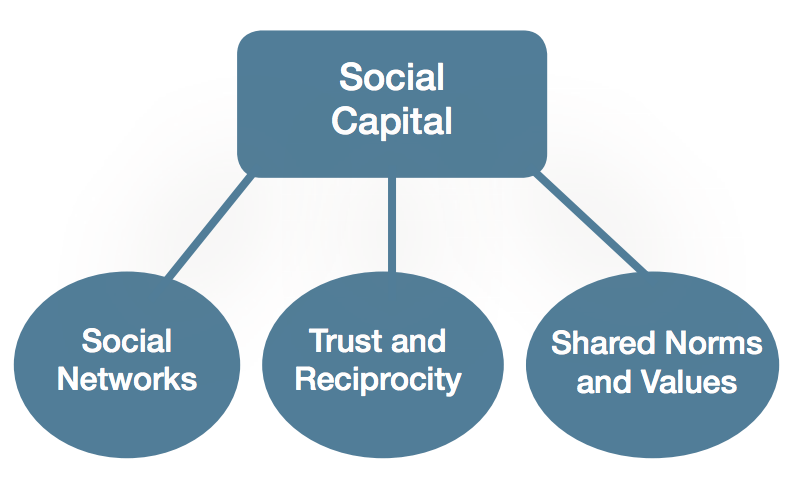
3) Ananias and Sapphira schemed to illegitimately acquire disproportionate “social capital”

Here we come to the heart of A&S’s motivation. The couple had previously witnessed Barnabas being honoured for his generosity and they wanted some of that notoriety (Acts 4:32-37). As a number of commentators note, A&S were likely seeking to gain acclaim within the young church (“What generous folks these are!”). But brief acclamation alone is likely insufficient motivation for this type of duplicity. Mikayla’s label of “social capital” helps expand what comes with the acclaim A&S sought. For them the deceitfully leveraging of resources would gain them abundant community status and privilege(s), along with increased influence (ability to get their way) within the community.

This type of social capital isn’t free, of course. But A&S had ample money at their disposal, and in most communities money usually comes with a measure of influence. All they had to do, they thought, was use some of their money to buy some social capital. But how much? Spending all of it seemed too high a price. Acclaim and privilege is one thing, but they couldn’t gamble it all. They needed some future currency for a rainy day. So, they figured that about half their money would be about right. A steep price to be sure, but acquiring privilege doesn’t come cheap.

Then Peter said, “Ananias, how is it that Satan has so filled your heart that you have lied to the Holy Spirit…”

Acts 5:3

Peter rightly identifies this attempt to manipulate and exploit the community of Jesus as satanic. The devil was trying to get a foothold in the door of the church (Acts 5:3).

4) Community manipulation is considered “testing” (presuming upon) God

Peter said to her, “How could you conspire to test the Spirit of the Lord?….”

Acts 5:9

A&S perhaps believed that God probably wouldn’t notice or care, or that he’d overlook their duplicity and manipulation. After all, they were bringing much needed money to a community in its infancy. It may even be the case that they thought their actions would be of ultimate benefit to the church (while simultaneously being personally beneficial). In that case the deception and money-leveraging was somehow pragmatically justified (if something brings about an immediate good end, we can probably overlook some indiscretions in the method). And after all, isn’t that just how things operate in the world everywhere anyway? If I find myself with resources that others don’t, such as abundant monetary or social capital, doesn’t this permit me the privilege of leveraging (manipulating) my capital to get more privilege(s)?

This was, as Peter says, putting God to the test (Acts 5:9). Was he truly a God of justice and holiness, treating everyone without regard for social status or wealth? Or would he look sideways as this type of community deception and manipulation tried to slither its way into the church?

As it turns out, A&S discovered that God really is no respecter of persons.

5) God upheld justice, while also protecting the fledgling church from power-politics.

Because the fledgling church was at high risk of being permanently damaged at such a fragile stage in its development, God intervened in a radical way. God’s reaction was not simply tied to his aversion to injustice and lying. The deaths of A&S served not only as their judgement, but also as an act to protect the community and the gospel they carried (as well as a timeless object lesson). What was at risk here was nothing less than a potential sabotage of the newly formed church (Acts 5:11 is the first time Luke uses the word “church” [ecclesia] to describe this community).

A&S had shown they were not truly co-servants of the community, but instead were intent on using the community to serve their own interests and so demonstrating themselves disloyal (thanks to Stephen Barkley for helping me see this better). This is difficult for those of us in hyper-individualistic cultures to see at first. But God’s big goal is not simply the conversion of individuals, but the formation of a community of witnesses, though whom the message of Jesus as true king would be proclaimed and exhibited. This community would proclaim not only with words, but would bear witness by living out a distinct set of values.

The values of the community of Jesus would be contrary to what was commonly accepted in a pagan culture, in which people strove to “lord over” others. Sometimes this goal could be achieved by leveraging physical force, status, or money. Jesus had spoken against this very value system in Luke’s first volume, 22:24-27.

24 A dispute also arose among them as to which of them was considered to be greatest. 25 Jesus said to them, “The kings of the Gentiles lord it over them; and those who exercise authority over them call themselves Benefactors. 26 But you are not to be like that. Instead, the greatest among you should be like the youngest, and the one who rules like the one who serves. 27 For who is greater, the one who is at the table or the one who serves? Is it not the one who is at the table? But I am among you as one who serves.

Luke 22:24-27

To have permitted A&S to attain status as communal “benefactors,” while turning a blind eye to their deceitful and essentially pagan method for attaining social capital, would threaten to malform the impressionable young church from within. The very DNA, so to speak, of the church was in danger of being mutated into something monstrous. At risk was what it meant for the church to bear witness to Jesus, since they proclaimed a king that was unlike the kings of the world. Also at risk was community cohesion, since duplicity undermines trust. We cannot trust when we suspect that people are not as they seem.

So, this for me helps explain the radical reaction of the Spirit. He was protecting the church, and protecting the message of the gospel. But what does this mean for the church today? We’ll pick up this question in part 3.

How Not to Acquire Social Capital: Reflections on Acts 5:1-11, Pt. 1 of 3

Mikayla Neumann,
not Sapphira

It took only a few minutes after hearing the story for her to label what was quite likely the underlying motivation of the characters involved. The story was from Acts 5:1-11, of Ananias and Sapphira, a husband and wife who were members of the first century church. The story’s interpreter was my 20-year-old daughter, Mikayla. I was the story-teller.

But why would a father make his daughter listen to a paraphrased retelling of this odd story in the first place? Some context is needed.

What clergy do on Facebook

I belong to a Facebook group for credentialed clergy belonging to the Pentecostal Assemblies of Canada and Newfoundland/Labrador. I’d posted several questions in this group concerning the story of Ananias and Sapphira (A&S for short). I won’t rehearse all the details of this story (you can read it here). But in short, A&S attempted to deceive the early church about how much money they had in fact donated to the church. The deception was revealed to the apostle Peter (presumably by the Holy Spirit), and they both ended up dropping dead in what seems to be a direct act of God. Yikes!

My questions for my clergy friends were these. What was it that A&S actually did wrong that resulted is such an extreme conclusion? What was their sin? Merely lying? Death seems an overly harsh consequence in that case (didn’t Peter, after all, lie about knowing Jesus in the not to distant past?). But if not lying, then what?

It seems pretty important to figure this out, since whatever they were doing, God was unusually upset with it. Figuring this out might help us avoid doing whatever it was A&S were doing. And tied to this, what would this sin of A&S look like today anyway? Is this one of those ancient “sins” that no longer applies today, or does it still happen and matter today? And if it does happen, why don’t people keep getting struck down for it? Finally, how should the church respond if we’re aware of this type of sin taking place in our midst?

The story is not an easy one to interpret, which made discussion among this clergy group engaging and fruitful. We all (I think) learned some things, and it helped me sharpen my interpretation of the passage.

Late night chat with Gen Z

Later, during a late night chat with my daughter, I got the fun idea of presenting her with the same questions I’d posed to the clergy. What would a member of Gen Z think about the A&S episode?

I paraphrased the episode, and then asked (maybe interrogated) her about what might have motivated the characters. On the surface we know that money and deception are involved. But what did A&S think they were going to gain from using money and deception?

After only a few minutes of banter and processing, Mikayla labeled the motivation as likely being tied to acquiring “social capital.” Mikayla is entering her third year of university, majoring in psychology, and minoring in anthropology and philosophy. Apparently her exposure to the social sciences were coming in handy for interpreting Scripture! (And I was pleased to see that our tuition dollars were being well spent!)

Social capital and manipulation

I’m not a social scientist and am open to correction here. But as far as I understand it, social capital is the term used among social scientists to describe how belonging to a society or group mutually benefits all involved, provided that you play by the rules. So, if I treat others well by, say, being trustworthy, industrious, generally supportive, etc., then, all things being equal, I will also benefit in various ways. Others will grow to trust me, share or trade with me, and help me when needed. In other words, by acting in a particular way (trustworthy, diligent, etc.) I gain social currency, which I can then redeem depending on the level of trust I’ve engendered in a given community.

So what does this have to do with A&S? Well, first, desiring the mutual benefits that come with communal belonging isn’t the problem. Jesus encourages his followers to be honest, generous people, who, as a result, will likely become the type of neighbour that someone would usually like to have around. But Jesus also said there are good and bad ways to engender others’ trust and loyalty. A very bad way to do this is by manipulation, either by force (physical or social), or by misrepresenting ourselves in a way that essentially leaves others with no rational choice but to feel and act as if they owe us something, mainly significant respect or honour, and the privilege that comes with it (see Matt. 5:33-37 and 6:1-18).

All that to say, when Mikayla said that A&S were trying to gain social capital, she meant this in the sense of trying to manipulate a situation in order to gain excessive or disproportionate power and influence within the early church community. A&S attempted to use money and deception to leverage influence and privilege(s), and that’s a very serious problem.

But to make sure I’m not rushing to impose a current social science interpretation anachronistically onto an ancient text, we need to unpack the story a little more. This will help reveal why I believe Mikayla’s hunch was correct, and why understanding this is imperative for the church today. We’ll explore this in part 2.

Creativity and Mishandling Power: are the two intrinsically bound?

I’m just about finished reading (well, listening to) Andy Crouch’s, Playing God: Redeeming the Gift of Power. This is an important read for pastor and church leaders. One element that I really like is that Crouch affirms power as first and foremost a gift from God, and not primarily an evil. He also makes a strong case for institutions being the normal way for power to be multiplied, and for getting things done. Institutions are, therefore, not a necessary evil, but actually a necessary good.

Of course, like any gift in creation, power can be misused; and when power is misused, things go very bad, especially when wielded institutionally. So, all humans, but especially those with designated power or authority, are to grow in our awareness concerning how the gift of power is to be used, and how to avoid the subtle pitfalls that accompany a gift that comes with such potency for good or ill.

Playing god, innocuously

Crouch references Apple creator, the late Steve Jobs, a number of times in the book, as one who wielded tremendous power, formally and informally — sometimes well, other times not. One seemingly innocuous story highlights the latter. The story in brief is this. Jobs ditched a scheduled meeting with his co-workers for a spontaneous date with the woman who was later to become his wife, Laurene Powell. You can read Crouch’s retelling of this account for context, along with some commentary here (on pp. 133-136 of the book). But two comments Crouch makes are especially striking. The first relates to Jobs’ choice to break his obligations (promises) to others to pursue his romantic interests:

But in fact, what Jobs had done was play god, a god whose promises do not matter and, indeed, are ostentatiously broken in order to supercharge a new opportunity with the tantalizing taste of forbidden fruit. It is the stuff romantic dreams are made of: throwing caution to the wind, dropping everything for another glimpse of one’s crush. It is perfectly understandable. And it is saturated with god playing.

So, Jobs’ actions may have seemed trivial, but they reveal a willingness to overstep boundaries, especially when the right to do so is assumed. This is “god playing,” and we, like Jobs, also like to play god.

Second, rather than call each other on this power over-step, we not only ignore, but culturally have often spun this type of disregard of promises into a virtue of sorts. Crouch explains:

Yet this is exactly the sort of story we tell all too often about our heroes—or, better put, our idols—stories of breaking the rules in order to get the girl, bending the truth to serve some great cause, committing crimes in order to achieve justice. False god players believe that to have what we really need and want, we have to break our promises. We believe this, as Jobs’s choices that night show, even when it is patently not true.

Giving misuse of power a pass

Crouch goes on to say that we may tend to give creative, entrepreneurial people like Jobs a pass for their narcissism and misuse (sometimes outright abuse) of power because of the results they achieve. In other words, we all too frequently assume abuse of power is necessary in order for a person to fully exercise their creativity in a maximal beneficial way. Isn’t this, after all, what enabled Jobs to achieve what he did? This type of thinking is true, by the way, both outside and inside the church (and it is idolatry, “false god playing,” in both contexts). Crouch argues that this assumption is dead wrong. He states:

Of course, the opposite is closer to the truth. It is not those who keep their promises who end up bereft, but those who have been seduced into god playing.

Abuse of power never, then, ultimately brings about maximal human flourishing for group or individual.

I’m not as concerned as much here with what happens outside the church world as inside it, although both realms are important. But since within the church we have at least in principle declared that our allegiance is to Jesus, it is a very serious matter when idols of power (i.e., misuse/abuse of power) are allowed to operate unidentified and unchecked, or worse yet, celebrated as a necessary part of the “entrepreneurial” or “creative spirit.”

What do you think?

So, what do you think? Do creativity and entrepreneurship necessitate that we (ought to) look the other way when abuse of power is evident (even when the abusers are getting results)? Or is Crouch right, that the best expression of creativity and entrepreneurship, for both the creative individual and the masses, is that which works towards allowing others to also exercise their power as agents made in God’s image? And if Crouch is right, how might this change the way we handle “false god playing” in the church world?

Weary of Singing about Ourselves: Recovering the Neglected Dimension of Worship, Part 3

I’ve been arguing that we sing too much about ourselves in worship and not enough about God. Worship, instead, needs to be viewed as formational and as such should be more thoughtful and in general be structured around the story of God.

But a possible objection here might be that this approach sounds overly cerebral or maybe even too pragmatic. Isn’t an approach that makes worship serve the goal of Christian formation (discipleship) simply making worship a means to an end? And how would this possibly fit into a Pentecostal approach to worship?

Well, what is a Pentecostal approach to worship? Pentecostals have always had a subjective, experiential leaning in their spirituality and worship. From early on (although not so much lately) Pentecostals emphasized personal testimonies as a means by which to pass on their faith. Do we need to give up this rather subjective component of worship? I don’t think so.

Jean-Jacques Suurmond in Word and Spirit at Play, argued that Pentecostals (and charismatics) approach worship as “play.” Church mosaic detailsWorship is not a means to an end, but an encounter with God. But as “play” (or a game) it is built around both rules and structure (Word) and spontaneity (Spirit). Pentecostals have emphasized the spontaneous aspect of worship, but their worship has never really been “unstructured.” (See Daniel Albrecht’s Rites in the Spirit on this.) For Pentecostal worship to work, it always had to have had a basic framework in which the spontaneous elements were able to be exercised. I’m suggesting that singing about God can help provide the structure in which the subjective aspects of worship (and song) can then be celebrated.

So, I am calling Pentecostals to be more intentional about making worship be more God-centred so that we can be formed into better disciples. I’m not calling for a removal of the holistic, physical, celebratory approach that characterizes Pentecostal worship. And certainly worship must be viewed as being an encounter with God. But for worship to be encounter with God it must be about God.

Let’s put it this way. The call here is not to move from non-formational worship to formational worship. All worship is already formational. The songs we sing, the prayers we pray, spontaneous or not, already are forming us in some way. Worship cannot help but be formational to some extent. And so, the call here is simply to recognize it as such. Once we acknowledge this, we will hopefully take more care to make sure it is helping to form us to be what we think it is that Jesus wants us to be/come. And I don’t think this can happen with the current glut of subjective-focussed songs.

One more implication. If what I’m saying is right, I think this will have some practical repercussions not only for what we sing, but also concerning who we place in charge of leading our congregations in worship and singing. If worship is about encounter with God that forms us into the people God desires us to be, and this is to be shaped by a focus on God’s story, then those who lead us must be people familiar with God’s story in a deep and profound way. Further, those who lead worship must know how to lead people into worship that has God as the subject matter.

Worship is such an important component in Christian formation that musical giftings just might not be the first quality that is needed in a worship leader. Worship leaders first of all need to have a good grasp on Scripture and the Christian tradition. Musical abilities are important, to be sure. But the task of leading people into God-centred worship entails not primarily musical skills, but theological and pastoral skills. So, all worship leaders must continually be growing in their knowledge of the story of God and how to translate this into meaningful words and actions for the people of God with the dual goals of encounter with God and Christian formation always in view.

Let’s move toward making God, not ourselves, the centre—the subject matter—of our worship.

Weary of Singing about Ourselves: Recovering the Neglected Dimension of Worship, Part 2

Admittedly, more than a little time has passed since my last blog.

But let’s think of this blog hiatus not so much as a matter of my being negligent, but more so of a long dramatic pause, in which anticipation has been building. Sort of like the year-long interlude between installments of The Hobbit or Hunger Game movies. 20131213_090610

This interruption raises some issues of continuity, of course, particularly because this instalment is a second part of a previous blog on worship. So it might be worth re-reading the first part. But without further ado, let’s get to it.

My contention to this point is that in Pentecostal (and broader popular evangelical) worship the subjective dimensions have been emphasized to the detriment of the objective. I’ve demonstrated what I mean by the “subjective” in my previous blog, namely having ourselves (humans) as the subject matter of our songs and prayers. Now I need to explain what I mean by “objective” and why it’s so crucial. Both aspects are necessary for properly formational worship, of course, but I think the objective dimension deserves priority.

By the objective dimension I am referring to God’s story being the focus, the subject matter, of our songs. This is the story we find in the Bible, and the story into which we find ourselves invited.

Subjectively-oriented worship songs highlight our personal relationship with God, through Christ by the Spirit, as an element of being included in God’s story. But this subjective dimension needs to be framed by God’s story lest we get the impression that all that matters is my personal relationship with God (and, more narrowly, the state of my internal psychological dispositions in that relationship). God’s story, the objective dimension of worship, is what gives meaning to the subjective dimension.

A focus on the objective dimension of worship means giving ample attention to God and his story. God’s story is found in Scripture. The Bible tells his story—his desires for humanity and creation, his plan, through Jesus, to redeem what has been broken and lost. The Bible does not simply make abstract statements about God (e.g., God is love), but places these in the context of a story that demonstrates the actions of God as, say, loving. What this means is that we don’t really know God unless we know his story. His story reveals his identity. Abstract concepts do not.

This implies that it is necessary but not sufficient simply to have the name “God,” “Father,” “Jesus,” or “Holy Spirit” in our songs. The subject matter of what we sing must not simply make offhand reference the proper names of God, but must actually revolve around God and his story. So, we need to ask ourselves about the subject matter of our songs. Is the song primarily about us or about God and his story? If the songs we sing in worship do not actually reiterate the story of God, then those singing will simply provide the content (from our imaginations) of what these names, or other abstract concepts, mean.

(So, it might not be a bad exercise to do a longer-term review of the songs regularly sung in our churches. In the past three months what has been the primary subject matter of our songs? God and his story, or us?)

The above may seem to be a fairly abstract way of talking about worship. But here’s what it practically implies for what we do when we gather together. In large part corporate worship is to be a reiteration or re-telling of the story of this God and his actions in history, with special attention given to the story of Jesus, through whom God’s redemptive plan is worked out. It is this that actually shapes the people of God to be what God wants them to be.

Assumed in what I’m saying here is a philosophical commitment that needs to be made explicit: I believe that worship needs to serve the ultimate purposes of discipleship and Christian formation. Worship ultimately serves discipleship. So, if worship is deficient, so too will be the discipleship of those regularly participating in that worship.

0924101413-00Here I’m not saying anything new. The church has always said that the “rule of prayer is the rule of faith.” In other words, the way we worship is what we believe; or, the way we worship shapes what we believe and who we are. But this means our worship needs to be theologically thoughtful and practically intentional—far more so than it often is.  A couple good resources on this are the late Robert Webber’s, Ancient-Future Worship, and from a more pentecostal angle (note the small “p”), Glenn Packiam’s Re-Forming Worship.

Worship, then, is to serve to regularly retell and even re-enact the story of God, so that we are again and again (and again) reminded of the God with whom we have to do. Only in this way will our individual lives as followers of Jesus be properly given context. We will be drawn into a story that is much bigger than our own lives, and a story that in fact gives our lives meaning. In short, worship will help form us into the people—corporately and individually—that God intends us to be.

And this can only happen if the primary subject matter of our worship is God.

This view might well raise some objections and questions—particularly from Pentecostals, who might object that this view sounds too cerebral. I promise that’s not what I’m suggesting. But we will need to wait to address such concerns until the next installment, which I promise (pinky-swear) will not be long in coming.

Weary of Singing about Ourselves: Recovering the Neglected Dimension of Worship, Part 1

iStock_000003277185XSmallI believe in worship. It is crucial to the Christian faith, and for the formation of both congregation and individual believer. What Christians do in worship tends to shape attitudes, beliefs and behaviour, perhaps even more so that listening to teaching or a sermon. So, worship is important. It’s so important that we should ask, from time to time, whether our worship is forming us into what God would want us to be(come). I’ve been asking myself that question. Here’s what I’ve concluded.

I believe a great deal of worship today is overly focused on us, and because of this it contributes to deficiencies in Christian formation.

Let me explain.

First, what do I mean by “worship”? I’m aware that in recent years there’s rightly been emphasis on “worship” being what Christians do (are supposed to do) in all of life. This is intended to deliver us from the notion that attention on God is something that only happens during church services, whereas in reality our whole life matters to God. I get it, and believe it. But here I’m addressing “worship” in its more narrow sense—the times Christians gather corporately to proclaim the worthiness of God through song, prayer, Scripture reading, and so forth. Even more narrowly, I have singing in view, since that has always been one of the favoured worship expressions in the church, especially within Pentecostalism.

Second, to narrow things still further, I’m primarily speaking to Pentecostals here. That is the tradition to which I belong, and overwhelmingly my church-going experience has been in Pentecostal churches. It’s familiar turf for me, and so I’m more confident in speaking to this subtradition. At the same time, evangelicals can probably be included here, since Pentecostalism has increasingly influenced the broader evangelical spectrum. (See here.) So, my thoughts likely apply to a wider Christian audience.

But enough of these preliminaries.

My belief, again, is this: our worship (singing) is, at times, excessively focussed on the ones doing the singing. Put another way, I mean that at all too frequently the subject matter of our songs proclaims our human story(ies), while too often neglecting the story of the one for whom we have gathered to worship, namely, God.

The songs I have in mind here are ones that emphasize our experience with God (usually personal, less often corporate—another issue I’ll take up another time). The lyrics frequently highlight our internal psychological state (i.e., how I feel about God, or my relationship with God, or even how I feel about how I’m feeling). With rare exception such songs are generally celebratory (not lamentations—how did those ever get into the Bible?!), emphasizing everything from personal life transformation to intimate ecstatic or even romantic moments with God. In short, these songs are often highly personal, internal, and emotion-focused. The content is primarily a reflection on one’s personal journey, and/or internal psychological states with regard to relationship with God. The subject matter of these songs is about us.

Now, human stories do provide an important element in worship—let’s call this the subjective dimension of worship. When we sing about our life of faith, our feelings about God and so forth, these are important expressions. Pentecostals have reminded the church globally that it’s right to celebrate God, and even testify concerning our experiences with God.

Pentecostals have always believed that spirituality involves more than the mind—the body and emotions also matter. And so worship involves not only mind, but also how we feel, and our physical gestures (hands raised, shouts, dance, tears, etc.). It is this physicality that has bled over into evangelicalism. Observe worship in many evangelical churches and services today, and you’ll notice people raising hands, moving their bodies, and proclaiming praises aloud. Such things are evidence of the Pentecostalization of evangelicalism.

Pentecostalism, in the early days at least, also prided itself on telling and hearing personal testimonies of how God was working in the lives of believers—bringing healing, conversions of a prodigal loved one, and fresh baptisms of the Spirit. In doing God became not simply a point of doctrine for many believers, but a living reality. God was one who was involved in all of human life, interrupting the course of things to transform and touch hearts, or to bring inspiration and healing. So, it only made sense to testify, robustly, about such experiences in word and song.

And all this is good—so far as it goes.

But testimonies, in word or song, especially once they become focussed on internal psychological dispositions, can lose their location in the broader and more important story for Christian formation: God’s story. Let’s call God’s story the objective dimension of our faith and worship. It is this dimension that I fear is largely being neglected to our long-term spiritual detriment.

I’m not sure of all the reasons, but we sometimes tend to believe that the best worship is that which expresses our personal feelings. Again, I’m not against expressing emotions in worship. After all, why wouldn’t we? And of course God wants us to be sincere in worship. But let’s not confuse heartfelt sincerity with worship that is in “spirit and truth,” as Jesus says (Jn. 4:24).

Let’s face it, sometimes worship songs can even become downright sappy. In my more cynical moments I’ve wondered if certain songs have been composed by a group of 16-year-old girls who have just watched the entire Twilight movie series in one sitting, replacing the name of some dreamy vampire with “Jesus” (if Jesus’ name appears at all—usually it’s just a pronoun: “he” or “you”).

Okay, enough cynicism. But let me provide one ironic illustration of how, even with our best intentions to focus on God, we still end up singing about ourselves: Matt Redmond’s 1999 song, “Heart of Worship.”

Yes, I’m aware of the background story to the composition of the song (see here: http://www.crosswalk.com/church/worship/song-story-matt-redmans-the-heart-of-worship-1253122.html). My point is not to dismiss the song. I think it’s a beautiful and meaningful song, and a testimonial of what God did in one situation, and quite likely needs to do in all our lives from time to time.

My point is that the song is ironic. A friend pointed this out to me a few years ago. Look at some of the lyrics.

When the music fades
And all is stripped away
And I simply come
Longing just to bring
Something that’s of worth
That will bless your heart

 I’ll bring You more than a song
For a song in itself
Is not what You have required
You search much deeper within
Through the ways things appear
You’re looking into my heart

I’m coming back to the heart of worship
And it’s all about You
All about You, Jesus
I’m sorry Lord for the thing I’ve made it
When it’s all about You
It’s all about You Jesus

The “heart of worship” is Jesus, according to the song. But the song is not about Jesus. The song is about a personal existential journey, away from being mesmerized by human performance to attention on the one for whom the music is being played. It’s a story about Matt Redmond, and based on how well the song caught on, a song about many, many of us. But the subject matter of the song is, overwhelmingly, not about Jesus, the heart of worship.

We are, I think, so used to the subjective dimension of worship—singing and hearing songs about our experience of God—that we simply might not realize we are sometimes neglectful of the objective dimension of worship. We are missing singing and hearing about God’s story. And it is detrimental to our spiritual formation, and the Christian faith.

That’s all for now (this is far too long as it is). I’ll say more about why I think this objective dimension is important in part 2 of this topic.

Is your (view of the) church too small? Pt. 2

By way of reminder, last week I began a review and reflection on John Armstrong’s book, Your Church Is Too Small. In it he argues that our view of the church needs to expand beyond our own local congregation. Really, he is emphasizing that the evangelical world has lost the idea that the church is “catholic”—again, not Roman Catholic, but a visible (not merely invisible) global community of God’s people.

Closely associated with this view of catholicity is church unity or oneness, a sense of belonging to the broader church made tangible in what we do in local congregations. A deep appreciation for the catholicity and unity of the church is needed in order to fulfil God’s mission in the world, says Armstrong. And he argues his case biblically and theologically, as well as practically.

Biblically, Armstrong points to John’s Gospel, for example, and highlights Jesus’ prayer for unity (John 17). Why would Jesus have bothered to pray for unity, asks Armstrong, unless this would be a real challenge for the church? Practically, it’s far easier to simply ignore the broader church and other congregations, and build one’s own local kingdom, isn’t it?

But Jesus’ prayer for unity means that Jesus believes that the church unified was and is the best witness to the reality of God. It also means that Jesus knew this unity would not be easy. And so he prayed for the church, specifically for its oneness.

One of Armstrong’s most troubling observations (to me at least) is this: The evangelical church typically operates with the assumption that a divided church is normal, if not normative, and good. Armstrong writes,

“Many Christians, especially evangelical Christians, have accepted the idea that a deeply divided church is normative. Some even believe mission is best advanced through this divided church. To challenge this mind-set is not easy, but I believe it is time for Christians to reconsider the ecumenical implications of believing that there is ‘one holy catholic and apostolic church’.” (ch. 19)

How did it come to this? Where we think disunity is normal, and perhaps more effective for doing God’s mission? Is there not a profound misalignment here with Jesus’ prayer for unity?

To be clear, Armstrong is not asking for a unity that supresses diversity, nor one that ignores doctrinal differences between denominations. He is not advocating an embrace of Roman Catholicism or Eastern Orthodoxy (although he believes both of these traditions have much to offer and need to be listened to carefully). He is, however, asking Christian leaders to seriously consider that church unity and catholicity is part and parcel of the mission of the church, local and global.

So, lots to think about here. I thought this topic would be a two-parter, but I think I’ll stop here (which means a part 3 is in the works).

To recap, Armstrong is advocating that the present acceptance of church disunity is a tragedy, and that church unity and catholicity should be an integral part of kingdom mission. I think he would say that a local church that does not have church unity and catholicity woven into its mission is a church operating with a deficient view of what God has called the church to do. Without working toward tangible, visible unity and catholicity as part of its call, local churches will not properly bear witness to Christ.

I think Armstrong is really on to something here. How about you?

Is your (view of the) church too small? Pt. 1

A couple of days ago I finished John Armstrong’s, Your Church Is Too Small: Why Unity In Christ’s Mission Is Vital to the Future of the Church. It has given me lots to think about. Here’s the link to the hardcopy (I read mine on Kobo): http://www.amazon.ca/Your-Church-Too-Small-Christs/dp/031032114X/ref=sr_1_1?ie=UTF8&qid=1374853633&sr=8-1&keywords=your+church+is+too+small

IMG_5013  This is not a church growth book, in the popular sense.  The “too small” church does not refer to the size of any particular local congregation, but rather to the vision of the church typically assumed in evangelical contexts. In this view, the church is a local assembly, invisibly (read vapidly) connected to the church universal. This allows local congregations and pastors to think they can get on with the business of the church by building their local congregation while practically ignoring the rest of the church globally.

Armstrong believes that this view is a key theological/biblical problem and practical hindrance to the mission of the church today. He argues that a crucial component of the way forward for the church in a post-Christendom world is a rediscovery of the need for church unity and catholicity. Part and parcel of the church’s mission is tangible work toward demonstrating the universal visible reality of the church, and so Armstrong advocates what he terms a “missional-ecumenism.”

Armstrong readily admits that he once held the traditional evangelical (shal)low church view, along with its suspicion of ecumenical dialogue, for a long time. It was only through study of Scripture and church history that he claims led him to appreciate that a stronger catholic view of the church is what will ultimately enable the church to fulfil its mission. “Catholic” here does not refer to Roman Catholicism. It simply refers to the idea that the church is global and visible in a variety of cultural expressions, and yet at the same time is one by the Spirit—and that this needs to be visibly expressed. Part of the church’s mission, then, is to preserve its catholicity in order to be the best witness to the world. Ignoring this aspect of mission is actually counter-productive to being the people of God and bearing witness to Jesus—in other words, not sufficiently missional! Yikes!

I’ll pause here, and leave the rest of the review to a future date. But it’s a good place to ask whether our own view of the church looks like what Armstrong describes as typical among evangelicals (and Pentecostals too) especially in North America. In short, this is the view that says we belong invisibly the church universal, but what matters is my local congregation, period (more or less). Unity is of course important within the local congregation (to keep things functional, and the pastoral vision central). But working for any broader church unity is of little practical importance, and may even work against promoting our local church by giving attention elsewhere.

I was pleased, back in 2005 at an A2 Conference in Chicago, to hear Bill Hybels admit that this had basically been his view of the church until God began to change his mind. He stated (and I’m paraphrasing from memory here) that in his mind he had wished other congregations good luck (hope it goes well with you!), but in practice all that mattered was the Willow Creek congregation. I appreciate Hybels’ honesty, humility, and willingness to change his views—a lesson for us all. But it does confirm Armstrong’s suspicion that for many, if not most evangelicals, catholicity is by default off the radar when it comes to church mission and priorities.

So, what’s your view? Does catholicity factor into what your church prioritizes? Is it part of your personal view of the church? Should it be? If so, in what ways and to what extent? Have you ever considered that working to preserve catholicity is an integral part of the mission of the church, and by extension, your life mission?