
Which tongues count? This question is one I’ve been mulling over for some time now, and what prompted me to host a just-for-fun poll among ministerial credential holders within two Canadian Pentecostal denominations — the Pentecostal Assemblies of Canada (PAOC) and the Pentecostal Assemblies of Newfoundland and Labrador (PAONL). I wanted to find out what my ministerial colleagues believed concerning the source behind the practice of speaking in unknown languages, and how we evaluate whether any such speech is authentically the direct result of the Spirit’s activity. In a Pentecostal context the practice of tongues matters a great deal spiritually, theologically, socially, and vocationally; so this is not a trivial question. Again, for Pentecostals, which tongues “count” and how would we know?
Now, for those outside the Pentecostal camp, the above paragraph might seem almost unintelligible — like a foreign language needing interpretation. Admittedly this blog is about a very peculiar topic, pertaining to an in-house discussion of a revivalist sub-tradition within the much larger Christian tradition. So, some background is in order so that all might be able to understand and benefit. This background will take up the entirety of part one of this three-part blog post.
Tongues in the Bible
First, in the Christian Bible, in the New Testament, there are stories that mention early Christian believers speaking in unknown languages in direct response to the activity of the God, the Holy Spirit. To clarify, the tongues were unknown to the ones speaking, which indicated the supernatural source of the activity. The languages spoken were, however, intelligible to the crowds that initially overheard these early Christians. Here’s the story from the New Testament book of Acts, written by Luke (also the author of the gospel of Luke).
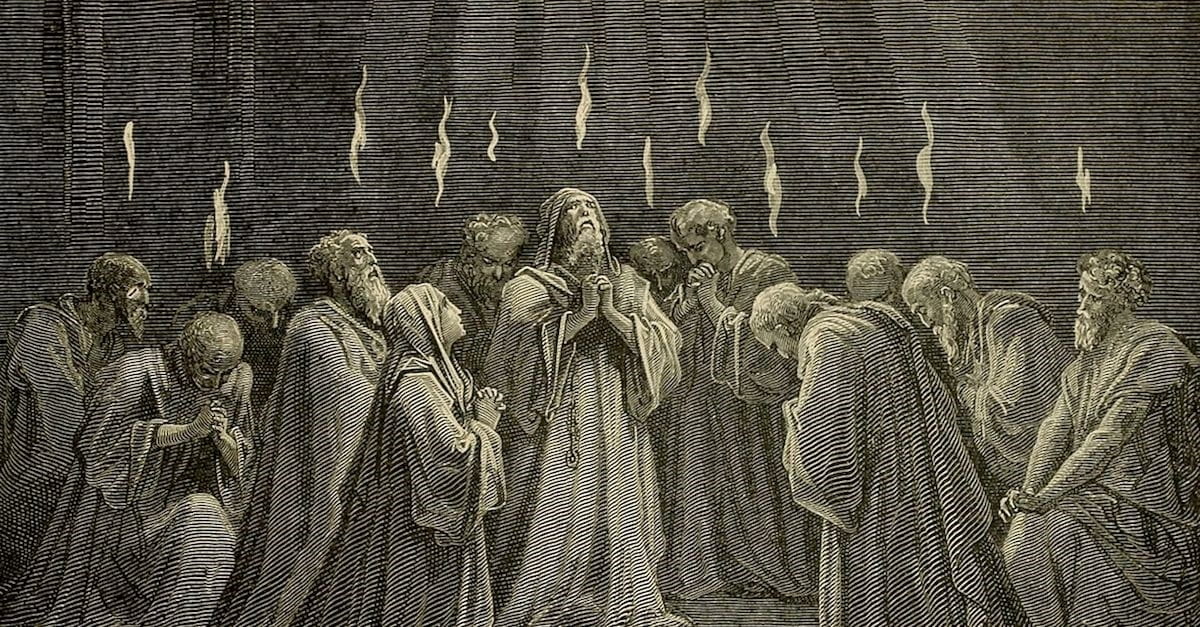
2 When the day of Pentecost came, they were all together in one place. 2 Suddenly a sound like the blowing of a violent wind came from heaven and filled the whole house where they were sitting. 3 They saw what seemed to be tongues of fire that separated and came to rest on each of them. 4 All of them were filled with the Holy Spirit and began to speak in other tongues as the Spirit enabled them. 5 Now there were staying in Jerusalem God-fearing Jews from every nation under heaven. 6 When they heard this sound, a crowd came together in bewilderment, because each one heard their own language being spoken. 7 Utterly amazed, they asked: “Aren’t all these who are speaking Galileans? 8 Then how is it that each of us hears them in our native language? 9 Parthians, Medes and Elamites; residents of Mesopotamia, Judea and Cappadocia, Pontus and Asia, 10 Phrygia and Pamphylia, Egypt and the parts of Libya near Cyrene; visitors from Rome 11 (both Jews and converts to Judaism); Cretans and Arabs—we hear them declaring the wonders of God in our own tongues!” 12 Amazed and perplexed, they asked one another, “What does this mean?”
Acts 2:1-12 (NIV)
The book of Acts mentions Christians speaking in unknown tongues a couple of other times as well, in chapters 10 and 19. But it’s not the only New Testament book that mentions this spiritual activity. The Apostle Paul, in his first letter to the Corinthians, chapters 12 – 14, speaks several times about the Spirit enabling believers to speak or pray in unknown tongues. He writes that this is a beneficial spiritual activity (for the one praying), and also provides guidelines as to how speaking in tongues should and should not be used in a public worship service. Paul also mentions the possibility that these unknown tongues could be in human languages or the language of “angels” (1 Cor. 13:1). Lyman Kulathungam, in his book, God’s Quest, proposes a third option: tongues may also be a language unknown to humans or angels, but only known to God (1 Cor. 14:2).

If I speak in the tongues of men or of angels, but do not have love, I am only a resounding gong or a clanging cymbal.
1 Corinthians 13:1 (NIV)
I’m still processing whether there are three categories of tongues for Paul or whether he intends angelic languages to be the same as the tongues known only to God (meaning, not to other people). But regardless, the mention of angelic language or only-God-knows tongues does provide an option other than tongues being a real human language (whether a dead or living language). I’ll return to this issue immediately below, but for now we can at least see that speaking in a language unknown to the speaker is a concept and practice found in the Bible.
For anyone who speaks in a tongue does not speak to people but to God. Indeed, no one understands them; they utter mysteries by the Spirit.
1 Corinthians 14:2 (NIV)
Digression: Different kinds of tongues?
The idea that there are possibly three types of tongues speech (human, angelic, and only-God-knows) can become a bit confusing. So, to help us more easily discuss this distinction (in case this matter comes up in conversation with friends or neighbours), two different terms are often used to distinguish between non-human and human tongues: glossolalia and xenolalia. These terms are rough transliterations from the Greek in which the New Testament was written, which is why they might seem strange, and may require (you guessed it) some interpretation.

Glossolalia comes from the Greek glossais “language/tongue” + lalein “to speak.” It is the term that is used to refer to speech in any language unknown to the speaker (human, angelic, or only-God-knows).
Xenolalia comes from xeno “foreign” + lalein “to speak.” And refers more narrowly to speech in a language unknown to the speaker, but which is a real human language (usually living, but perhaps dead).
In sum, any unknown tongues speech (to the speaker) can be glossolalia, but a subset of glossolalia is xenolalia. Xenolalia is what appears to be happening in Acts 2 (discussed above), since the tongue-speaking disciples were understood by the crowd of foreigners. The idea that there is tongues speech other than xenolalia is due to Paul’s reference to “angelic” speech in 1 Cor. 13:1 and perhaps to 1 Cor. 14:2 (only-God-knows speech). This digression will make sense shortly.

Tongues and Pentecostals
To reiterate, we first identified that tongues are mentioned in the New Testament — this strange manifestation is part of the wider Christian story. Secondly, within wider Christianity, Pentecostal denominations and traditions emphasize the biblical story of Pentecost (Acts 2), when the Holy Spirit was outpoured to the church in a new and radical way. This giving of the Spirit transformed the lives of the early Christian disciples, and was signified by their being enabled to speak in unknown languages.
The event of Pentecost
Arguably even more important to Pentecostals than the event of Pentecost (the day in history) is the emphasis on the repeatability of the experience that the disciples had on that day: being “filled with the Spirit” to enable them to bear witness to Christ, and as a result, speaking in tongues (xenolalia).
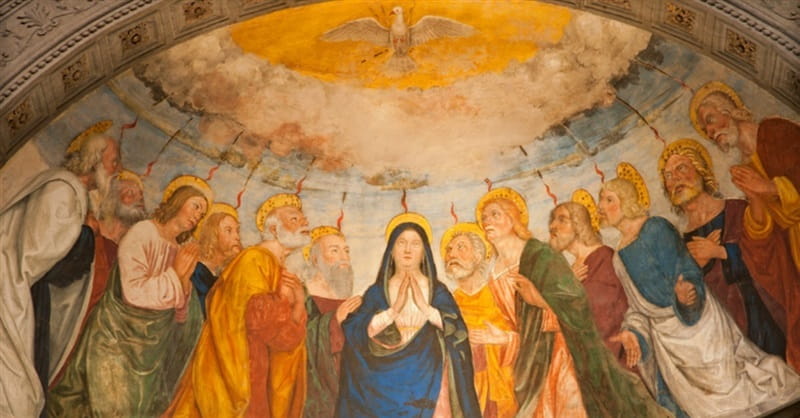
As an aside, I personally believe that emphasis on the Pentecost event needs to take precedence over the repeatability of the experience in order to understand what the experience is for. Reversing this will not work, and has only served to untether the experience from its grounding event, meaning that the experience of being “filled with the Spirit” can take on emphases never intended, such as seeking tongues as opposed to seeking to be enabled for Christian mission. Why the Spirit was poured out on Pentecost is the purpose of the experience for Christians on that day and today. Further, any experience of the Spirit today in Christian life finds its basis in the event of the day of Pentecost. Without that day, there is no repeatable experience of Spirit baptism available. Event precedes repeatability historically and theologically.
…emphasis on the event [of Pentecost] needs to take precedence over the repeatability of the experience, in order to understand what the experience is for.
The experience of Pentecost
(Sidebar: The alliteration in the above two subtitles was entirely unintended. Please, Gen X-ers, don’t stop reading.) 🙂

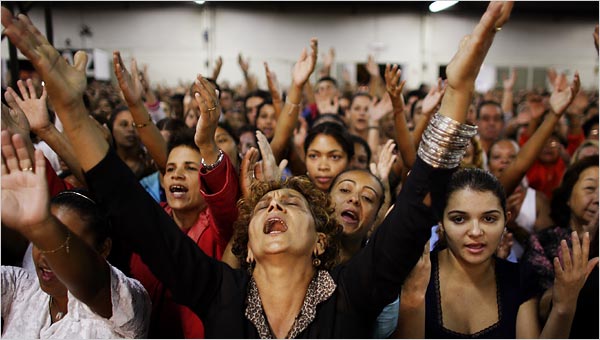
While the event of Pentecost is theologically primary, what one will typically hear emphasized in a Pentecostal church is not the Pentecost event in history, but the experience with the Spirit that is available for Christians today. And this is an important emphasis. Christians should be open to and even expect an experience of being “filled with the Spirit.” Pentecostals define this as being a distinct experience from one’s conversion to Christ, which is available for those who are already followers of Christ. Being converted to Jesus brings one into God’s household, so to speak; but God then propels the believer out into the world to join in the divine mission to bear witness to Jesus. To be a witness requires the special enabling of the Holy Spirit, and so an enablement (empowerment) is granted to disciples, known as being “filled with the Spirit,” or getting “baptized in the Spirit,” or for convenience, “Spirit baptism.” First-century Christians needed this enablement, and so do Christians today. That, in brief, is the traditional primary Pentecostal emphasis.

But it’s not the only Pentecostal emphasis. Unique to Pentecostals is not that they were open to and sought this first-century-type Spirit baptism experience. Other pre-Pentecostals in the nineteenth century had taught this as well. Unique to historical Pentecostals is that they linked a particular tangible manifestation to the reception of the Spirit baptism experience as the indicator (or the “initial evidence” of “Bible sign”) that one had indeed had an authentic experience of Spirit baptism. The authenticating sign was, unsurprisingly, speaking in other tongues. If one spoke in tongues, one could truly know that one had indeed participated in the same experience as the first-century disciples. Support for tongues as being the tangible indicator was based in Acts 2, 10, and 19. And since no other sign-indicator is repeated in Acts as being tied to Spirit baptism, there does seem to be some textual support for holding tongues as being uniquely linked to Spirit baptism. But in what sense?
Tongues as experience-receipt or more?
Is tongues primarily a tangible external indicator that one has truly, authentically, had the experience of Spirit baptism? Or is tongues a sign of something of more theological depth? Put another way, is tongues merely a receipt to prove that one has had a certain type of experience with the Spirit? Or, do the tongues exhibited on the day of Pentecost in Acts 2 serve to signify why the Spirit was being outpoured to the church?

Tongues as an experience-receipt seems like a rather reductionist application of the Acts 2 story to me. This is not to say that tongues cannot function as an indicator of Spirit baptism. In fact, it does serve this secondary purpose in Acts 10, where a Roman Centurion, Cornelius, and his household were identified as having been filled with the Spirit because they unexpectedly broke out in tongues in the middle of Peter’s sermon in that household. Here’s the account:
44 While Peter was still speaking these words, the Holy Spirit came on all who heard the message. 45 The circumcised believers who had come with Peter were astonished that the gift of the Holy Spirit had been poured out even on Gentiles. 46 For they heard them speaking in tongues and praising God. Then Peter said, 47 “Surely no one can stand in the way of their being baptized with water. They have received the Holy Spirit just as we have.”
Acts 10:44-47 (NIV)

So, tongues can function as evidence in this way. But even more so, and primarily, tongues is a sign of why the Spirit was outpoured to the church. Tongues is used as the sign (and nothing else quite fits the bill) to indicate what God was doing with the church and how the church was to see itself, now that the Spirit had been given in this new and radical way. Tongues, then, is a theological sign, pointing to what God is up to in the church and believers.
That tongues is a sign means that God did not choose tongues as the sign of Spirit baptism arbitrarily (“Hey angels! Know what would be cool to have followers of Christ do when the Spirit is outpoured? Tongues! Haven’t tried that one before! Watch this!”). Rather, tongues points to (explains) the purpose of the gift — Spirit enablement for witness. To expand, tongues signified that the church was 1) being supernaturally enabled, 2) to bear witness (speech), 3) to all peoples (languages and ethnicities). No other manifestation is able to signify this quite as well.

So, the proper order for understanding tongues is that it is first a sign of what God was up to and why the Spirit was outpoured to the church. it is secondarily an indicator that one has shared in this Spirit baptism experience. Pentecostals have sometimes over-emphasized the secondary function of tongues, which has often tended to reduce tongues to a speech-receipt serving to identify those have had this experience (and conversely, those who have not). This is an overly individualistic way of looking at the Pentecost story, which neglects the implications of this story for the church community and in understanding God’s wider plans for his people and creation.
Just as underemphasizing the event of Pentecost untethers the Spirit baptism experience from its purpose, so too neglecting the communal implications and the order of priority to understanding the function of tongues in Acts flattens its theological meaning and purpose. Tongues is not simply the “initial evidence” of a particular experience with the Spirit; it is first of all the sign of what the Spirit intends for the church, and what every believer may participate in.
Functions of tongues
Some might also want to raise the point here that tongues is also a wonderful gift to help us when we pray and worship. And this is true. Acts suggests that tongues speech are words focused on exalting God (Acts 2:11; 10:46).
“…we hear them declaring the wonders of God in our own tongues!”
Acts 2:11
“For they heard them speaking in tongues and praising God.”
Acts 10:46
But we shouldn’t push this too far. The priority in Luke’s story is on the Spirit enabling witnesses for Jesus. And even when tongues is linked to praise or expounding on God’s wonderful works, these tongues function to help expand the witness of Jesus. The third mention of tongues, in Acts 19:6 notably includes mention of the believers prophesying, a sign that they were serving as spokespersons for God. Luke’s focus is always clear — the Spirit is helping God’s people bear witness for Jesus.
“When Paul placed his hands on them, the Holy Spirit came on them, and they spoke in tongues and prophesied.”
Acts 19:6
So, Luke’s emphasis in Acts is on the Spirit enabling believers for witness, and tongues serves to signify that ability being provided along with its scope (witnesses to the nations). What is not mentioned in Acts is tongues being used as a personal devotional prayer language, which is a separate application of tongues introduced by Paul in 1 Cor. 14.

I’m leaving discussion on tongues for devotional communication to the side here because it is not an emphasis of Luke’s and will take us well beyond the focus of the blog. I will only say this: in my view there are two functions of tongues in Acts and two in 1 Corinthians. As stated, in Acts tongues serve 1) to signify the purpose of the Spirit’s outpouring to the church, and 2) as an indicator of participating in that experience. In 1 Cor. 12 – 14, tongues function as 1) a private prayer language, or 2) as part of a public message to the worshiping community, provided the tongues are then interpreted into an intelligible language for the hearers (see 1 Cor 14:6-17). Acts and 1 Corinthians are dealing with separate applications, although both are presumably talking about the same activity of tongues.

Back to the point…
And this brings us back to the purpose of this blog. Tongues are obviously an important New Testament practice, meaningful for signifying the Christian vocation, identifying the Spirit baptism experience, and as a means of communication with God. But the very lack of intelligibility of tongues raises some questions: for Pentecostals, which tongues count as authentic (for all of the aforementioned) and how would we know? That will be the where we’ll pick up in part 2 of this series as we look at what some PAOC/NL credential holders believe about the matter.
 Peter D. Neumann
One thought on “Which Tongues Count? Pt.1”