

not Sapphira
It took only a few minutes after hearing the story for her to label what was quite likely the underlying motivation of the characters involved. The story was from Acts 5:1-11, of Ananias and Sapphira, a husband and wife who were members of the first century church. The story’s interpreter was my 20-year-old daughter, Mikayla. I was the story-teller.
But why would a father make his daughter listen to a paraphrased retelling of this odd story in the first place? Some context is needed.
What clergy do on Facebook
I belong to a Facebook group for credentialed clergy belonging to the Pentecostal Assemblies of Canada and Newfoundland/Labrador. I’d posted several questions in this group concerning the story of Ananias and Sapphira (A&S for short). I won’t rehearse all the details of this story (you can read it here). But in short, A&S attempted to deceive the early church about how much money they had in fact donated to the church. The deception was revealed to the apostle Peter (presumably by the Holy Spirit), and they both ended up dropping dead in what seems to be a direct act of God. Yikes!

My questions for my clergy friends were these. What was it that A&S actually did wrong that resulted is such an extreme conclusion? What was their sin? Merely lying? Death seems an overly harsh consequence in that case (didn’t Peter, after all, lie about knowing Jesus in the not to distant past?). But if not lying, then what?
It seems pretty important to figure this out, since whatever they were doing, God was unusually upset with it. Figuring this out might help us avoid doing whatever it was A&S were doing. And tied to this, what would this sin of A&S look like today anyway? Is this one of those ancient “sins” that no longer applies today, or does it still happen and matter today? And if it does happen, why don’t people keep getting struck down for it? Finally, how should the church respond if we’re aware of this type of sin taking place in our midst?
The story is not an easy one to interpret, which made discussion among this clergy group engaging and fruitful. We all (I think) learned some things, and it helped me sharpen my interpretation of the passage.
Late night chat with Gen Z

Later, during a late night chat with my daughter, I got the fun idea of presenting her with the same questions I’d posed to the clergy. What would a member of Gen Z think about the A&S episode?
I paraphrased the episode, and then asked (maybe interrogated) her about what might have motivated the characters. On the surface we know that money and deception are involved. But what did A&S think they were going to gain from using money and deception?
After only a few minutes of banter and processing, Mikayla labeled the motivation as likely being tied to acquiring “social capital.” Mikayla is entering her third year of university, majoring in psychology, and minoring in anthropology and philosophy. Apparently her exposure to the social sciences were coming in handy for interpreting Scripture! (And I was pleased to see that our tuition dollars were being well spent!)
Social capital and manipulation
I’m not a social scientist and am open to correction here. But as far as I understand it, social capital is the term used among social scientists to describe how belonging to a society or group mutually benefits all involved, provided that you play by the rules. So, if I treat others well by, say, being trustworthy, industrious, generally supportive, etc., then, all things being equal, I will also benefit in various ways. Others will grow to trust me, share or trade with me, and help me when needed. In other words, by acting in a particular way (trustworthy, diligent, etc.) I gain social currency, which I can then redeem depending on the level of trust I’ve engendered in a given community.
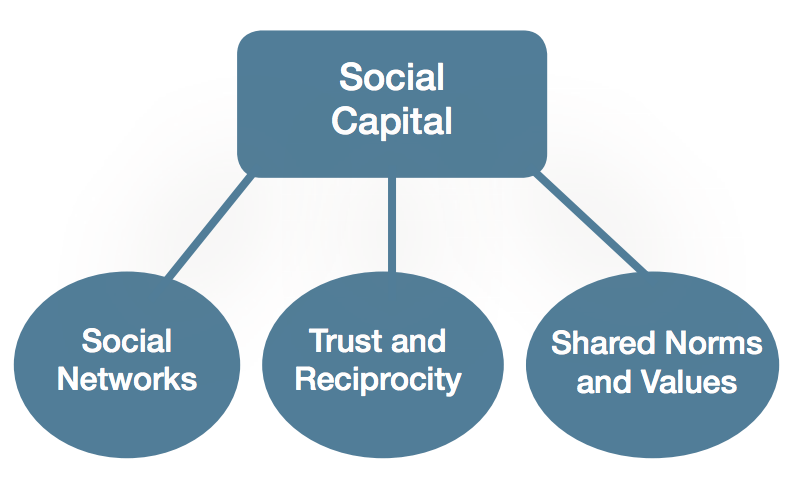
So what does this have to do with A&S? Well, first, desiring the mutual benefits that come with communal belonging isn’t the problem. Jesus encourages his followers to be honest, generous people, who, as a result, will likely become the type of neighbour that someone would usually like to have around. But Jesus also said there are good and bad ways to engender others’ trust and loyalty. A very bad way to do this is by manipulation, either by force (physical or social), or by misrepresenting ourselves in a way that essentially leaves others with no rational choice but to feel and act as if they owe us something, mainly significant respect or honour, and the privilege that comes with it (see Matt. 5:33-37 and 6:1-18).

All that to say, when Mikayla said that A&S were trying to gain social capital, she meant this in the sense of trying to manipulate a situation in order to gain excessive or disproportionate power and influence within the early church community. A&S attempted to use money and deception to leverage influence and privilege(s), and that’s a very serious problem.
But to make sure I’m not rushing to impose a current social science interpretation anachronistically onto an ancient text, we need to unpack the story a little more. This will help reveal why I believe Mikayla’s hunch was correct, and why understanding this is imperative for the church today. We’ll explore this in part 2.
 Peter D. Neumann
What a smart daughter! Takes after her mom….