

Here’s a fun one. In a recent blog, Roger Olson argues that current decisions by Christian believers to not assemble together for worship due to COVID-19 are right and good. But this decision indicates that these Christians tacitly believe it’s right and good to not obey an explicit biblical command (and a New Testament one at that!). At least not strictly.
The command comes from Hebrews 10:25 (I’ll include v.24 for context).
And let us consider how we may spur one another on toward love and good deeds, not giving up meeting together, as some are in the habit of doing, but encouraging one another—and all the more as you see the Day approaching.
Hebrews 10:24-25 (NIV)
To Open or Not to Open?
Let me say that I’m among those Christians who believe that the current reality of COVID-19 means that we should break this biblical command in order to live wisely and fulfil the more important law of love towards others (as this Christianity Today article argues). But not all believers feel this way, with some churches (thankfully a minority) refusing to close their doors, and others even encouraging physical contact, like hand-shaking during worship gatherings, as a public sign of faith in God (and an exercise of political freedom). And responses to this type of social and political non-compliance have received reactions from the wider Christian community in the form of corrective teaching or outright rebuke.

Actions Reveal our Interpretive Assumptions
But what strikes me about the actions of both the compliant and non-compliant in this social distancing situation is that our actions often reveal our interpretive (hermeneutical) assumptions concerning how the Bible should be understood and applied.
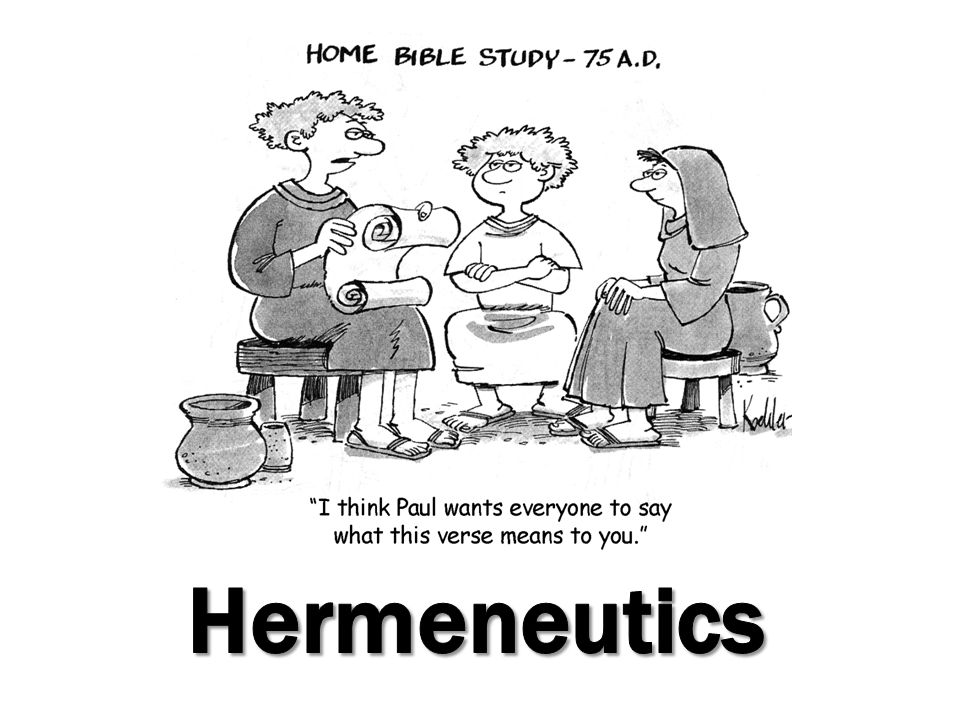
Some of the compliant might quickly rebut and say that we are not disobeying God’s word, and are meeting as much as we can; it is simply happening in a virtual medium online. True. But I’m fairly sure that most would not be entirely convinced that virtual meetings are quite the same as physically meeting together. So, I’m guessing that while we meet virtually, this is assumed to be a temporary measure until we can return to a more physical and human expression of Christian spirituality.
Back to my point. Church and individual Christian compliance or non-compliance to COVID-19 social distancing recommendations does tell us something about the way we understand the Bible, and what the Bible is for.
Are You Really A Biblical Literalist? Really?
For all those who considered themselves to be devout literalists, and yet who are choosing to not obey Hebrews 10:25 literally, it may be that you’re not quite the literalist you assumed yourself to be. You might even perhaps be, in reality, a mild-mannered and selective moral relativist. And this is in part what Olson is arguing. The very decision to not physically assemble together is at the same time a choice to set aside the literal biblical command to assemble. We might imagine that the writer to the Hebrews would have viewed present circumstances as an exception to the command. But in doing so we are using conjecture, since, strictly speaking, no exception is provided in the passage.
Here’s where things get fun. If we’ve chosen to make an exception to an explicit NT command here (due to extenuating circumstances), are we not in fact giving our present situation (our corporate experience) some measure of authority when it comes to the way we interpret and apply the biblical text? Seems like it to me, and I believe it is spiritually right and wise to do so.
This does not mean that biblical interpretation becomes a free for all, as Olson also points out. But it does mean that a flat literal reading of the Bible is not something that can be adhered to easily or consistently, and any church or Christian leader that has (rightly) chosen to forsake physical assembling of believers, even temporarily, is simply demonstrating this reality. In fact, they are demonstrating that their interpretive approach to the Bible is complex, and not strictly as literal as might be assumed.

Put concisely, those who stayed home from church these past few weeks, and pastors who have shut their church doors, have already abandoned, in practice, flat literalism as a way of iterpreting Scripture. And this should cause us to reflect and ask important questions, such as, what principle(s) does guide our understanding and application of Scripture?
Being mindful of How We Interpret Scripture in Real Life
It’s times like these, where we are compelled to make choices (and relatively quickly) that our interpretive assumptions and convictions come to light. We might discover that we’re far more pragmatic than we believed (we interpret the Bible to get the results we hope for — and this is not always a bad thing). As this happens, let’s be mindful of what we are deciding and why. Not so that we are frozen in indecision, nor to change our minds on what we’ve already decided. Rather, take time simply to observe what you’ve been deciding when it comes to biblical and spiritual matters and why.

What principles are actually guiding your choices as a Christian or church leader? What guides your biblical interpretation (what’s your hermeneutical approach to Scripture)? And if you’re satisfied with your interpretive (likely non-flatly-literal approach), are there other parts of Scripture where you’ve not allowed this hermeneutic to be applied in the same way? Why might this be, and what might happen if you do?
 Peter D. Neumann