Ever felt disoriented in your faith? Ever felt the need to broadcast your raw doubts and emotions to the world via social media?
Marty Sampson
In early August, Hillsong worship leader and songwriter, Marty Sampson, posted a now widely-read Instagram post (now removed) announcing the apparent loss of his Christian faith. He identifies at least half a dozen reasons for his doubts, with a recurring theme seeming to be that the church (at least the church in which he finds himself) has not allowed space to ask the tough questions.
John Cooper
Since Sampson’s very public confession, John Cooper, lead singer for the Christian band, Skillet, published a Facebook post where he expressed his disappointment in Sampson and other Christian leaders venting publicly on social media, in particular about their abandonment (or almost abandonment) of the Christian faith. Sampson has since fired back with a rejoinder to Cooper.
Now, Gen Xers like myself might be tempted to simply roll our eyes at this public joust between celebrity Christians debating how influencers should use their influence. But if we resist this temptation, not only will we avoid possible eye strain, we’ll be able to focus and reflect on some important and very relevant issues here.
When it comes to the matter of spiritual disorientation. Many, if not most, Christians at some point experience some measure of doubt or confusion about their faith. So, while we might have some opinions about the appropriate use of social media for venting raw emotions (especially for Christian celebrities), it’s not the case that Christians should ignore our emotions or questions that might unsettle us.
Scripture Talk on Ps 73
The above is simply a preamble to give context to a teaching session in which I addressed the issue of spiritual disorientation, looking at Psalm 73. This Psalm was composed by Asaph, Israel’s worship leader when Solomon was king. It reveals Asaph’s own struggle with doubts about God’s goodness. He wonders whether remaining faithful to God is really worth it, or even realistic, considering the prevalence of injustice in the world. Asaph reminds us that sometimes we’ll feel that reality doesn’t match what we’d expect if a good God was really in charge.
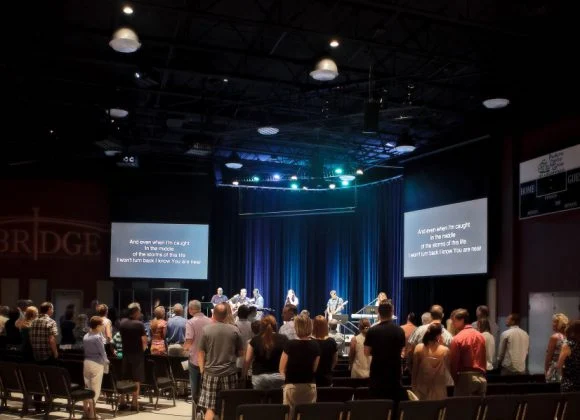
This talk was given at King St. Community Church’s Young Adult group, where I’m currently serving as interim leader. I’d already planned to speak on Ps 73 prior to Marty Sampson’s Instagram post, but having a widely-known worship leader publicize (perhaps prematurely) his own Asaph moment, really helped highlight the relevance of this raw but encouraging Psalm. The focus is the way habitual corporate, God-centred worship can help serve as a point of reference in reorienting believers in their faith.
So, please give this a listen. I’d appreciate your feedback, and some reflection questions are below.
KSYA – Disoriented: Help When Faith Doesn’t Make Sense 2019-08-18
Questions for Reflection
What questions or observations might cause you to become disoriented in your Christian faith?
What’s your reaction to some Christian leaders announcing their faith struggles (feelings, response, etc.)?
To what extent is corporate worship (gathering with other Christians to focus on God) important for your spiritual life? Why?
What do you think of the idea that worship needs to be God-centred?
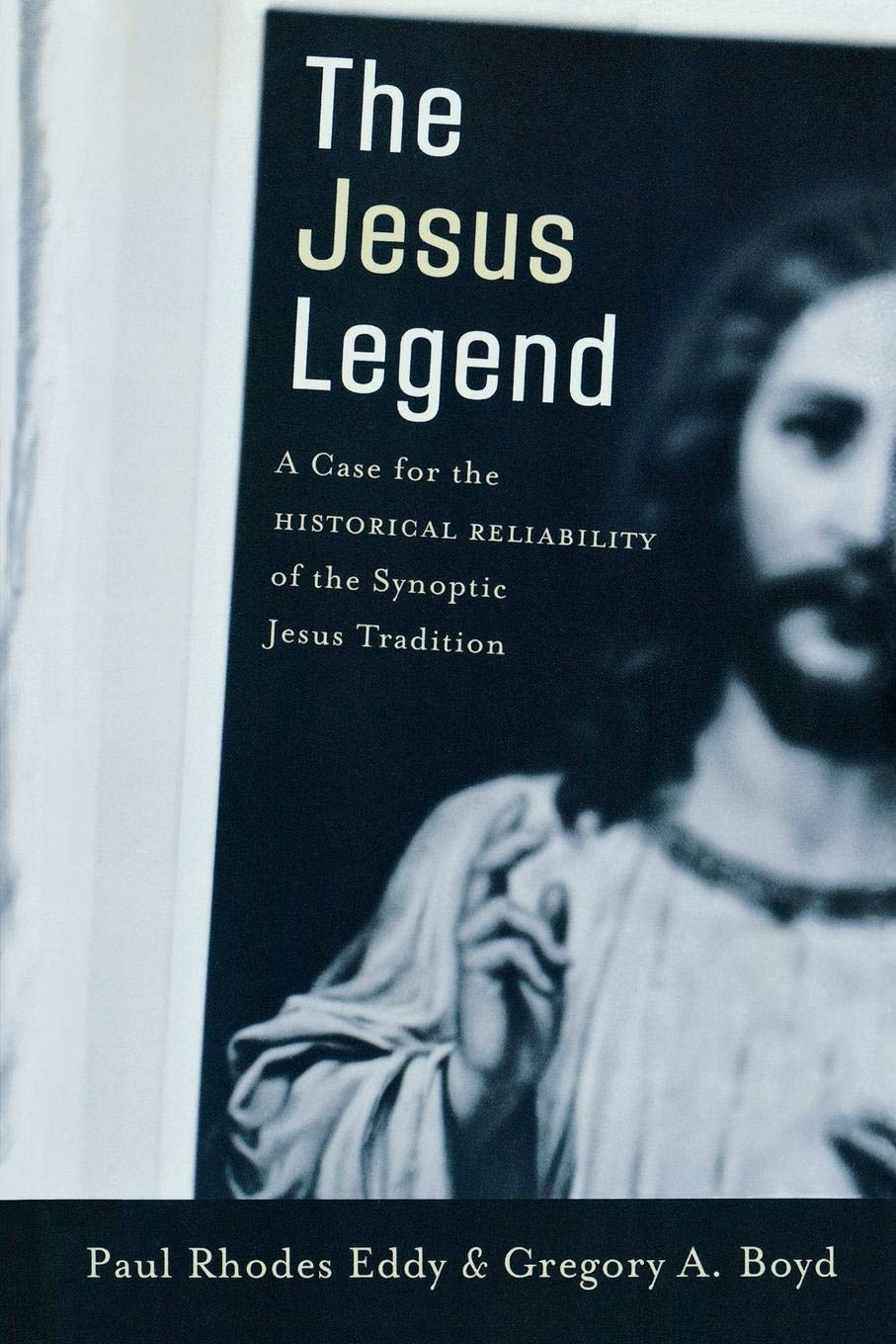
This post may be self-serving, due to my profession (Academic Dean and theology teacher), but I was struck by what might be considered a rather mundane quote in Greg Boyd and Paul Eddy’s, The Jesus Legend.
“Undoubtedly influenced by the example of Jesus’s own teaching ministry, teachers seem to have played a central role within the early church and appear to have been the first paid ministers (Gal. 6:6; Didache 13:2). In a predominantly oral community such as the early church, the primary function of these teachers would have been to transmit faithfully the oral traditions….”
Setting aside the fact that quite possibly the first paid position in the church was for teachers :-), let’s recap, according to Boyd and Eddy, why teachers were deemed worthy of remuneration in the early church. In short, the importance of teachers in the early church was largely tied to ensuring the content of the story of Jesus, the “tradition,” was accurately being passed on among Christians. There was concern that without skilled masters of the tradition (professionals?), the content of the gospel would quite possibly begin to be lost. Since that loss was directly counter to the church’s mission, teachers and the gift of teaching was given a prominent place.
Teaching as an Outcome of Pentecost
Matt Foley, motivational speaker. Location: a van down by the river.
Notice how the teaching role is prioritized from the outset of the church’s life. In Acts 2:42, as a way of pointing to the longer-term outcomes of the giving of the Spirit to the church at Pentecost, Luke writes, “They [believers] devoted themselves to the apostles’ teaching….”
First on the list of a Spirit-filled church is the place given to teaching. And not just any teaching. The emphasis was not on ensuring that each church had a good communicator or motivational speaker, who could hold a crowd’s attention (although communication is part of being a skilled teacher). Nor was the primary concern to ensure the delivery of practical life skills for managing finances and/or anger during the week (as important also as those areas are for Christian life). Rather, the content of the teaching is carefully qualified as “apostolic.”
…the importance of teachers in the early church was largely tied to ensuring the content of the story of Jesus, the “tradition,”…
In other words, the teaching here referred to a specific content related to the life, death, resurrection, ascension, and eventual return of Jesus. That’s why the “apostolic” qualifier shouldn’t be missed here. The Holy Spirit led the church to emphasize the teaching of the apostles, the story of Jesus, in relation to his fulfillment of Old Testament expectations.
Even with the Bible, We Still Need Teachers
I need to insert an important aside here, since Boyd and Eddy’s point above mostly had to do with the role of first-century Christian teachers ensuring the continuance of what was largely an oral tradition concerning Jesus (the New Testament did not exist yet). Now that we do have the four Gospels and other NT books, do we really need those skilled in teaching to help pass along this tradition? Isn’t what’s needed already recorded in the Bible so we won’t forget? Well, yes and no.
The E-Bible. Making access to Scripture easier than ever before!
Yes, we have the gospel tradition recorded in the words of Scripture. But along with this we need those skilled in helping us understand the content of the gospel in the Bible. The church has always needed this because, frankly, the Bible is not always an easy book to understand. So, the Spirit gifts some people to be able to teach for the building up of the saints. Teaching — of the apostolic sort — is needed to ensure that the church and individual believers are continuing in the gospel tradition.
Programming Teaching out of the Church
A question I’m asking myself these days is whether the role of teacher (as one who is able to pass along the tradition of Jesus) is given sufficient place in churches that tend to structure their discipleship based on two main programs, Sunday worship and small groups. This is sometimes known as the “cell & celebration” model, and it is effective for many things. But I’ve come to believe that focusing on only these two programs has unintentionally but effectively diminished the role of teaching in the church. And this is seriously weakening the church’s ability to make informed, mature disciples, because the story of Jesus (and all sorts of other Bible stuff) is not able to be emphasized to the degree it should be. But why is this the case, despite the effort to make disciples through the two-pronged cell and worship celebration model?
The Sunday worship celebration (or whatever day your church chooses to do this) is effective for inspiration and some measure of teaching. But most pastors would agree that this is not really the most effective for learning the deeper content of the faith. This is mostly due to the larger size of the gathering, and the one-directional method of communication (from speaker to congregation, usually without ample opportunity for Q&A). The worship gathering is an essential component to discipleship, but not as practical, in general, for getting into the deeper content of the gospel, or helping one another along individually in spiritual formation. For that, a different, more intimate venue is needed, and the go-to program to attempt to address this need is the small group.
[apostolic teaching refers] to a specific content related to the life, death, resurrection, ascension, and eventual return of Jesus
The small group is an important program in the local church. These are especially needed when churches grow larger, and want to ensure relational connection is happening within the congregation. Small groups are very good at some things, such as building friendships, providing opportunities for prayer, and promoting practical care between members. These are all crucial elements of being discipled. But despite all these good things, small groups are generally (with exceptions) not very good as a teaching venue.
A stool missing one leg.
There are practical reasons that small groups (SG) are not really effective for teaching gospel content. First, SG leaders often do not want to be teachers; they want to be hosts and facilitators. In other words, they recognize that they are not all that comfortable being the expert in Bible content or spiritual life. Second, if the church really did want to train SG leaders to fulfill the role of teachers, it would need to dedicate a significant amount of its resources (time, money, and personnel) to the task of training. And I mean a lot — to the point of developing something like Bible College-level training. Most churches simply do not have the resources to do this.
So, in the move to the dual-program worship/SG program focus (again, both crucial), a third leg of the discipleship process has been accidentally omitted (or lopped off) — a program venue in which the role of the skilled, Spirit-gifted teacher in the congregation can be utilized. I contend that this is contributing to the challenge that many churches are having is passing on the Christian faith and creating mature, informed disciples. Teaching is perhaps inadvertently being programmed out of the church.
Churches and Leadership Training
Anecdotally here, I will add that a growing number of students we receive into Master’s College, where I serve as Academic Dean, are sometimes very unfamiliar with basic elements of the actual gospel story (and the Bible in general), and other foundational teachings of Christianity. This is not due to lack of character or intelligence of the students. These are good young people, enthusiastic to give their lives for the cause of Christ. Their passion and devotion is strong, but strong ties to the Christian tradition that will best enable them to carry out their calling in the long term is often weak or lacking — at least at the outset. Our faculty recognizes that a large part of their role is to help provide from a foundational level what is lacking in this regard for our students. Our teachers do a great job at this, all the while recognizing that we have students for but a short period before they graduate, and take on leadership roles in our churches and parachurch ministries.
At risk of generalizing, the Bible College usually receives its students from churches, and so it does raise questions as to the teaching that happens within our churches — teaching of the apostolic sort. My point here is not to fault churches or pastors for not wanting to make disciples or to emphasize biblical literacy; every pastor I know wants to do this. I do think, however, that sometimes church program structures may be working against this goal.
A Continuationist Proposal
Three-legged stool of discipleship: regular participation in corporate worship, small groups, and an “apostolic” teaching venue
As a Pentecostal, I believe that none of the gifts of the Spirit have ceased, and all are for today. Further, any programming that excludes the public function of any gift may be detrimental to the building up of the church (although all of this needs to be wisely contextualized; see my teaching here on the Holy Spirit).
What I propose, then, is that we need to rethink our programming to ensure that the gift of teaching is able to continue (along with all the gifts of the Spirit!). This will provide a third leg to our discipleship programming stool. Along with the large group (worship celebration), and small group, maybe we need to make room for another gathering (and I don’t really care where and when this takes place). If we want to stick with the size motif, we could say this is a call for a mid-size gathering. But the size of the group is not really the point, since the type of gathering I’m envisioning could be small or large, but not too large to the point where participation and interaction is restricted. What matters more than the size of the group is the focus. It needs to be on the “apostles’ teaching” — the content of the story of Jesus (the gospel, as Paul calls it in 1 Cor. 15).
That’s my proposal. Now some questions for reflection.
Some concluding questions, especially for pastors…
In what ways is the “apostles’ teaching” being allowed to function in your church? Does the current program structure in our church encourage or discourage the passing on of the apostles’ teaching?
In what ways is the Spirit able to gift people with teaching abilities in your context, and are they able to exercise this gift publicly?
How is the gift of teaching being celebrated and promoted in your church?
Are those with this gift being encouraged to pursue training to enhance their gift?











 Peter D. Neumann