

Part 1 of this blog series identified the motivation for addressing this subject. My denomination, the PAOC, has undertaken a “refreshing” of its Statement of Fundamental and Essential Truths (SOFET). I believe this is a positive and needed step, and it is not the first time the PAOC has revamped its faith statement. Nevertheless, revising doctrines introduces some level of discomfort.
From my conversations, a number of PAOC credential holders are asking good questions about how to teach in the midst of such doctrinal modification. In this second and subsequent posts, I want to offer some suggestions for navigating doctrinal refreshing and possibly evolution (I almost didn’t use that word to avoid triggering another debate, but I’m feeling bold :-)). Note that I’m not here recommending WHAT to believe, but HOW to manage a transitional “between time” time doctrinally. Let’s get started!
TIP 1: Don’t Panic! (Even if you really want to—and you might really want to!)
This first piece of advice is blatantly pinched from Douglas Adam’s, The Hitchhiker’s Guide to the Galaxy book series. But it’s an important tip and a good place to start.

In Adam’s sci-fi spoof trilogy (comprised of five books :-)) travellers of the galaxy are encouraged to carry a computerised book, The Hitchiker’s Guide, which contains all the information one might ever need on just about everything. When powered on, the first words appearing on the screen read, “Don’t Panic!” Because panicking is easy to do when venturing into unfamiliar and possibly perilous territory.
So too is panic a very real option in our present theological reality. Just as we feel a bit (or a lot) uneasy when journeying away from home because of the unfamiliar sights and sounds, our present location doctrinally feels not quite like home. Not quite safe. We may even describe our feelings as apprehensive or anxious. The good news is that this is quite normal, so no need to panic.
Feeling anxious amidst uncertainty is normal

It’s not unusual to feel some level of anxiety in the midst of uncertainty of any sort. Our brains, psychologists tell us, love certainty. It makes us feel safe and secure, at peace. So, we do not tend to enjoy having our beliefs challenged. We like the feeling of assurance that comes from believing that we understand well the reality in which we live. This gives us a sense of control. If there are no unknowns threatening to surprise us, we feel safer.
To guard our certainty, we often surround ourselves with people who tend to think like us. These folks reaffirm our convictions, and this reinforces our assurance that we are right and safe. We may even avoid exposure to information or questions that would challenge our beliefs. Doing so might make us feel less certain, less secure, less in control, and trigger anxious feelings, perhaps even anger. This is a normal response to perceived potential danger.
Confirmation bias
One consequence of our desire for certainty is that we all have a confirmation bias that affects our receptivity to information (whether it be true or false). We tend to seek out, and hear mostly loudly what confirms our current convictions. We have a harder time receiving what challenges our beliefs. This is true for everyone, from Christian to atheist.
Shahram Heshmat, in Psychology Today, describes confirmation bias:
“Once we have formed a view, we embrace information that confirms that view while ignoring, or rejecting, information that casts doubt on it. Confirmation bias suggests that we don’t perceive circumstances objectively. We pick out those bits of data that make us feel good because they confirm our prejudices. Thus, we may become prisoners of our assumptions.” (Link here)
This doesn’t mean that we are stuck in an echo chamber, only ever hearing our own
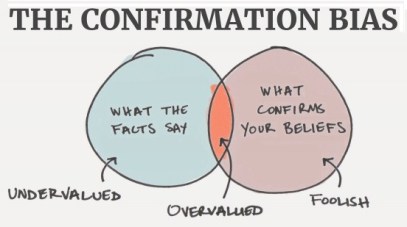
beliefs, and forever cut off from learning the truth about reality. We can learn new things, test our beliefs, and perhaps at times realize we’ve been quite wrong and change our minds. But this process usually involves some measure of discomfort and willingness to learn.
The deeper the uncertainty, the higher the anxiety
Now, we don’t typically feel overly troubled when it comes to trivial matters about which we might be mistaken. We usually receive this new information and make a correction. (E.g., I really believed I had sent that email, but it turns out I didn’t. I’d better send it now.) But when faced with new ideas, theories, or interpretations that suggest we might be mistaken about deeper, more foundational, long-held matters of life and faith, the incongruity between our current convictions and the alternative possibilities often triggers apprehension. The world no longer feels as safe as it did only a moment ago.
This is why Christians (often young adults) are sometimes caught off guard and sent into emotional crisis when they first begin to face questions about the veracity of their faith. (Are you really sure that God exists? Really? Really? Shivers!!!) And anxiety is only heightened if they’ve been taught that they should feel certain all the time about all their faith convictions (more on this in a future post).

This is also why it should be no surprise that “refreshing” a doctrinal statement might trigger apprehension (maybe even anger) in and among credential holders young and old. (This may even be felt more acutely by the latter, since they have a lot more invested in the long-held beliefs.) The stakes are raised even higher when it comes to beliefs that are more intricately linked to institutional identity—doctrines and policies that distinguish one denomination from another. (If we alter those doctrines/policies, then who are we? How are we different than other denominations or traditions?) The closer a challenge is perceived to pose a threat to what we consider a principal identity marker, the louder and shriller the anxiety alarm sounds, personally and corporately.
Deflating panic
So, what are we to do to avoid panic? Here are some suggestions.
1) Acknowledge feelings of uneasiness, doubt, anxiety, or anger concerning doctrinal uncertainty. Denying or suppressing these emotions will not help, and will only escalate the feelings. Knowing that uncertainty evokes these (sometimes powerful) emotions, and that it’s normal to feel such unpleasant emotions can help ease the discomfort. It’s not a sin to not feel certain all the time.

2) Know that feeling anxious, uneasy, or threatened doesn’t necessarily mean that our current beliefs are right and in need of defence. (Neither does it mean that the unfamiliar ideas confronting us are correct.) It simply means that something is challenging our current view of reality. Anxiety is not the arbiter of truth, and in fact it’s almost always a bad idea to make decisions—especially doctrinal and theological decisions—in response to anxiety. Acknowledge the possibility that one reason we may resist new ideas is for the simple reason that they are unfamiliar and make us feel uneasy. But again, feeling uneasy about doctrinal refreshing doesn’t mean that we are wrong or right in our current views; it simply means our views are being challenged. We need to then take more intentional steps to determine the merit of these ideas that challenge our current views.
3) Give yourself and others (and your denomination) appropriate time and space to process convictions. One temptation is to immediately push back against any proposal of doctrinal change, another is to rush to accept the latest ideas without taking time to investigate, reflect, and to think through the implications. In either case, it’s unwise to attempt to resolve theological and doctrinal matters too quickly. There are usually good reasons why denominations affirm their current doctrines and policies (not always, but usually). Resist the urge to speed things along recklessly. Learn patience with yourself and others—whether you are the type who resists change or embraces it easily. Deciding to adopt or decline new ideas takes time. Be patient with others, bearing in mind that times of uncertainty can make us apprehensive and reactive.

4) Denominational institutions need to provide space for credential holders to process new information and ideas. And credential holders need to be allowed to do this not alone, but with others, and without fear of immediate reprimand (real or perceived) for questioning or discussing long-held beliefs. This point simply builds on the previous ones. It’s a matter of spiritual and psychological well-being to be able to honestly admit one’s doubt and uncertainty to oneself. It’s also important not to process such emotionally-charged challenges alone. It’s healthy for us to be able to talk through our questions in a safe space with others who are equally invested in the outcome. Without opportunities to process our beliefs honestly with others, how would God ever help a group of people know if they were wrong so he could lead them into a more accurate understanding of himself and reality?
So, first tip, don’t panic! Second tip coming soon…
Reflections
- How do you feel when faced with uncertainty concerning your theological beliefs? Are you comfortable in exploring new ideas, or do you tend to avoid views that challenge your own? Why?
- How do you process your uncertainty when it comes to doctrinal beliefs (denial, panic, reflection, excitement, etc.)?
- What opportunities do you have to share your doubts and uncertainties with others?
- What questions do you presently have about your theological beliefs that you are finding challenging?







 Peter D. Neumann